
A tiny living room does not have to feel like a waiting room. With the right choices, a small space can feel warm, relaxed, and genuinely comfortable, the kind of room where people actually want to sit down and stay a while. The secret is not buying less stuff or living like a minimalist monk. It is choosing pieces and placements that work harder for every square foot. These 16 ideas cover furniture, light, color, storage, and the small styling tricks that make a compact living room feel bigger than it is.
1. Mount the TV on the Wall
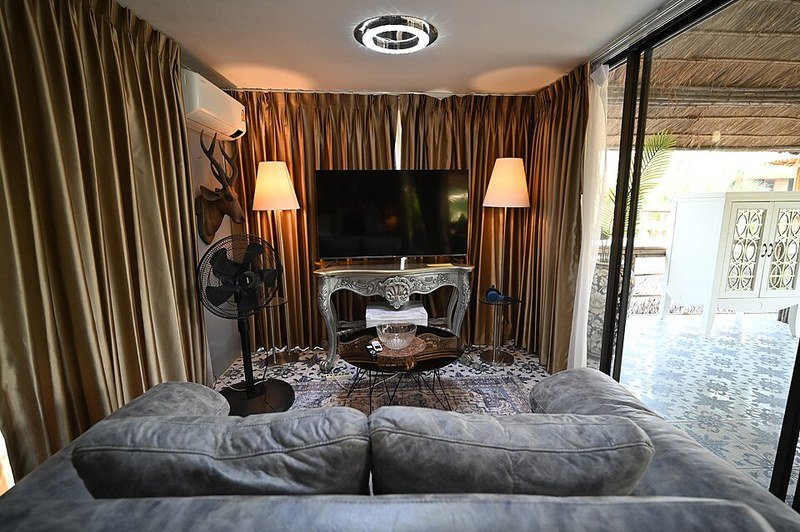
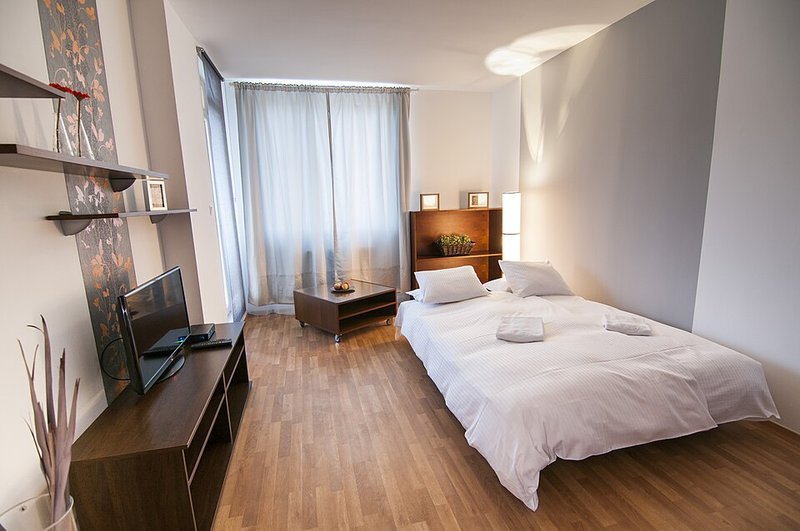
The television is usually the biggest bully in a small living room. It demands the best wall, the widest console, and a tangle of cables, and it gives back nothing except a black rectangle. Mounting it on the wall takes back all that floor and surface space in one move. A slim wall mount lets the screen sit nearly flat, and a narrow floating shelf underneath holds the streaming box and remote without a bulky media console.
Get the height right, because this is where most people go wrong. The center of the screen should sit at eye level when you are seated, which is roughly 42 inches from the floor for a standard sofa. Mounted too high, and movie night turns into a neck workout. Run the cables through a paintable cord cover so the wall looks clean instead of wired. And resist the urge to mount the TV above the fireplace if you have one. It looks dramatic in photos, but in a small room you sit close, and that upward angle gets uncomfortable fast. For more proof that small screens setups can look great, browse these small living room ideas from real homes on Apartment Therapy.
2. Buy a Sofa That Fits the Room, Not the Showroom
Here is the mistake almost everyone makes with a small living room: falling in love with a sofa in a giant showroom, then watching it swallow the room at home. Showroom lighting and high ceilings lie. Before you shop, measure your room and mark the sofa footprint on the floor with painter’s tape. Live with the tape outline for a day. Walk around it. If you are squeezing past it sideways, the sofa is too big.
For most tiny living rooms, an apartment-size sofa between 68 and 72 inches wide hits the sweet spot. It seats two adults comfortably without eating the walkways. Watch the depth too. A deep 40-inch lounge sofa looks inviting but steals a full foot of floor compared to a standard 36-inch seat. If you need more seating, pair a loveseat with one good armchair instead of forcing in a sectional. Two smaller pieces give you flexible arrangements, and you can angle the chair toward the conversation instead of lining everything against the walls like a furniture showroom.
3. Paint It Light, Then Bring the Color Back In
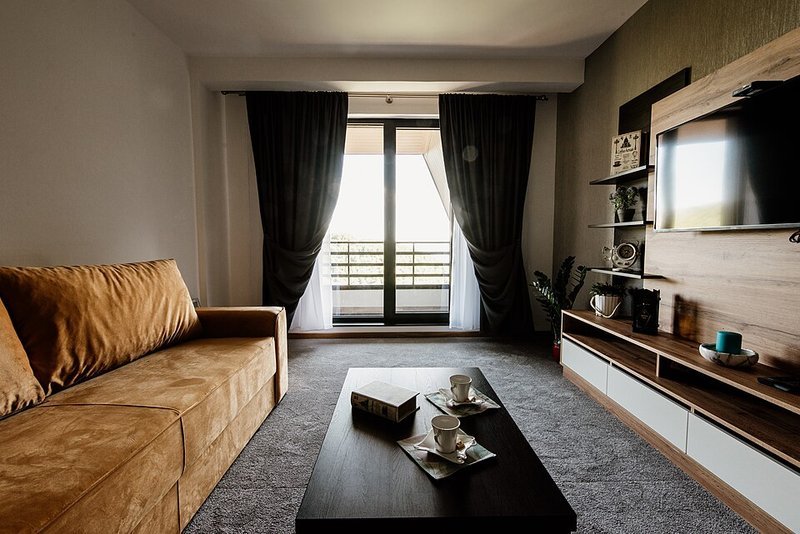
Light walls are the oldest trick in the small-space book, and they still work because physics does not change. Pale colors bounce daylight around the room instead of absorbing it, so the walls seem to step back and the ceiling feels higher. This does not mean you are stuck with cold, boring white. Warm whites, pale greige, and soft sage all keep the airy effect while feeling like a home instead of a rental listing.
The pro move is to paint the walls, ceiling, and trim in the same color, just in different finishes. Using one continuous color erases the visual lines where wall meets ceiling, and the room reads as one bigger volume instead of a small box with a lid. Then bring the color back through things you can change easily: cushions, a throw, artwork, a rug. That way you get the spacious feeling of light walls plus the personality of color, and repainting one accent wall later is a weekend job, not a whole-room project.
4. Hang One Big Mirror
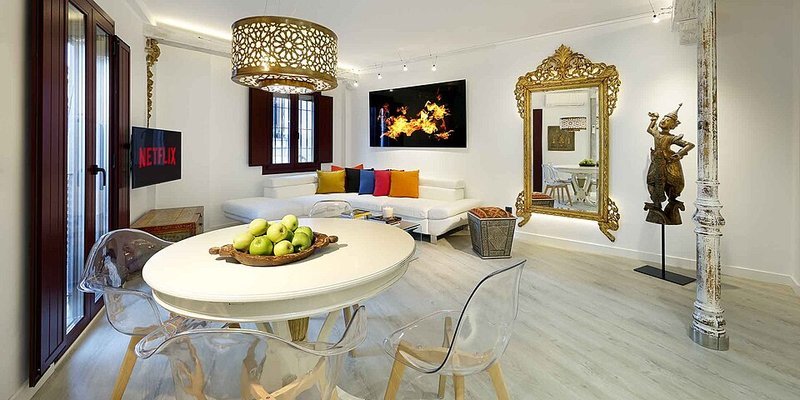
If your budget only stretches to one decor purchase this month, make it a mirror. Nothing else doubles light and the sense of space for so little money. A large mirror reflects the brightest part of the room back into it, so the whole space feels like it has twice the windows. Place it directly across from a window and you get the full effect. Place it across from a blank wall and you just get a bigger blank wall, so position matters more than price.
Go big or skip it. One generous mirror, at least two-thirds the width of the furniture below it, reads as intentional and calm. A cluster of tiny mirrors reads as clutter, which is the opposite of what a small room needs. A full-length leaning mirror tucked into a corner is a renter-friendly option that needs zero holes in the wall. Just make sure it leans securely and cannot slide. Clean it regularly, because a dusty mirror in a small room is very noticeable at close range.
5. Let the Rug Draw the Room’s Boundaries
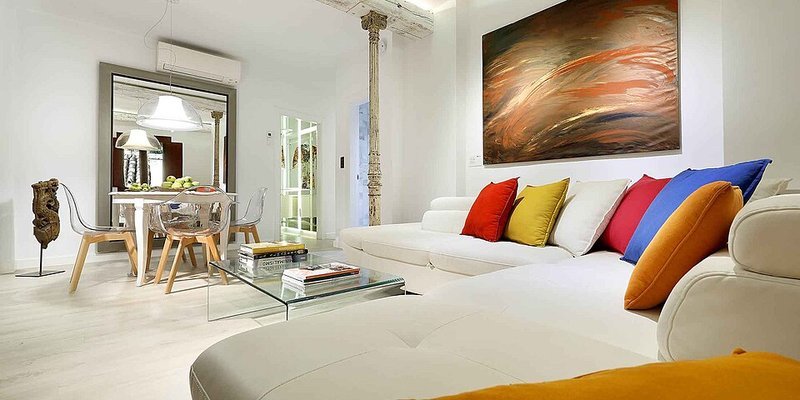
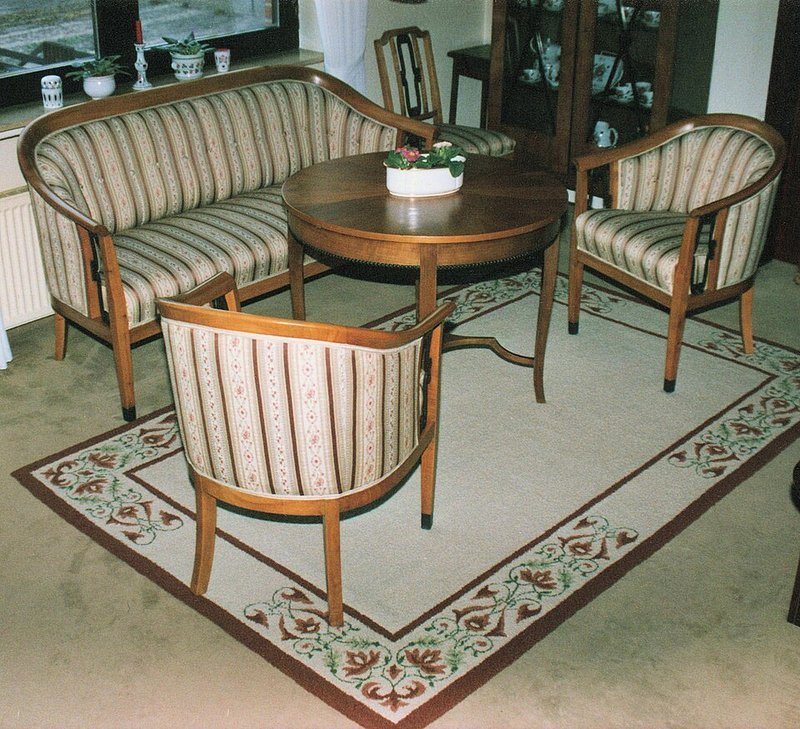
In an open-plan space, a rug is your floor plan. When the living area flows into the dining spot or the kitchen, a rug tells the eye exactly where the living room starts and stops. That visual boundary makes the seating area feel like a proper room instead of furniture floating in leftover space. It also anchors everything, so the sofa, chairs, and coffee table read as one group rather than separate pieces that wandered in.
Size is everything here, and most people buy too small. A postage-stamp rug under just the coffee table chops the floor into pieces and makes the room feel smaller. Aim for a rug large enough that at least the front legs of the sofa and chairs sit on it. In a truly tiny room, one large rug beats two small ones every time. Keep the pattern simple if the room is busy, or let a bold pattern be the star if everything else is plain. Either way, a rug underfoot also softens sound, which matters when hard floors and close walls bounce every noise around.
6. Build Up Instead of Out
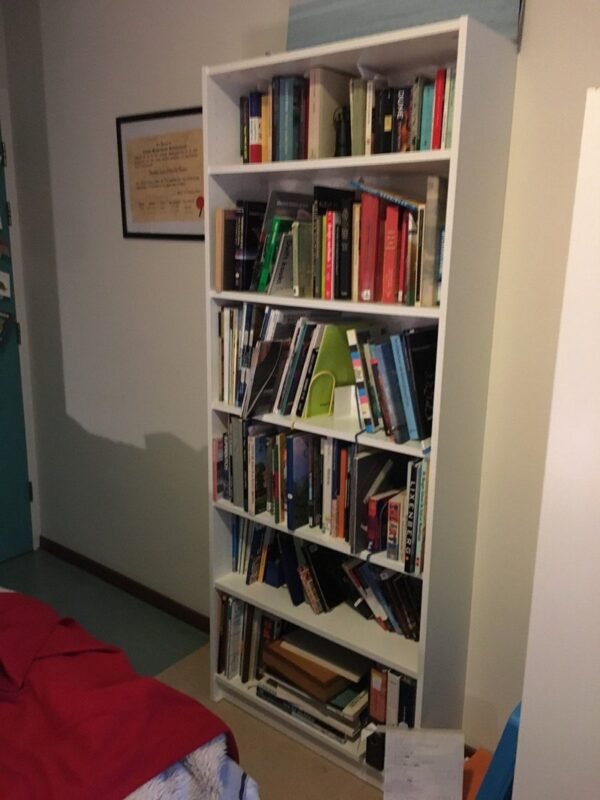
Floor space is precious. Wall space is free. When a living room is short on square footage, the answer is almost never a wider bookcase or a deeper cabinet. It is a taller one. A narrow bookcase that stretches toward the ceiling holds as much as a wide low unit while giving up half the footprint. The same logic works for art, shelving, and storage of every kind. Think vertical first, and the floor stays open for living.
A tall, slim bookcase beside the sofa can hold books, baskets, and a small plant without crowding the seating. Style it with some breathing room, not every shelf crammed full, or it starts to feel like a wall of stuff. One honest warning: tall furniture in a small room must be anchored to the wall. A top-heavy bookcase on carpet is a tipping risk, especially with kids or pets around. A simple anti-tip strap costs a few dollars and takes ten minutes to install. Do it the same day the bookcase goes up, not someday.
7. Make Every Piece Earn Its Place
In a tiny living room, single-purpose furniture is a luxury you cannot afford. Every piece should do at least two jobs, or it needs a very good reason to stay. A storage ottoman is the classic example: it works as a footrest, an extra seat when friends come over, a coffee table with a tray on top, and a hiding spot for throws, chargers, and the remote controls that multiply on their own. That is four jobs from one piece of furniture.
Look for the same double duty everywhere. A side table with a drawer beats a plain one. A sofa with a pull-out bed turns the living room into a guest room. A bench with a lift-up seat swallows board games and winter blankets. If you enjoy building your own, these DIY multifunctional furniture ideas are designed exactly for small spaces. Before buying anything new, ask what it replaces, not just what it adds. If the answer is nothing, the room is about to get more crowded, not more comfortable.
8. Layer Your Lighting
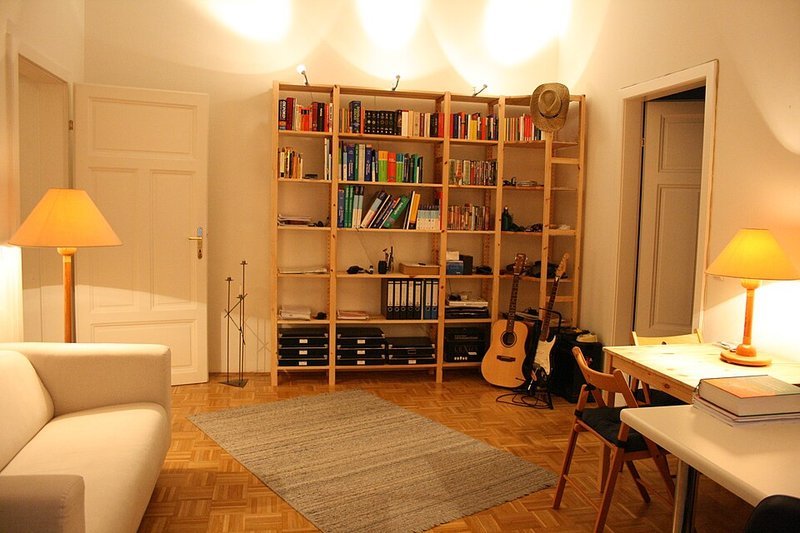
One ceiling light in a small room feels less like home and more like an interrogation. Harsh overhead light flattens everything, kills the mood, and makes a compact space feel like a dentist’s office. Comfortable rooms use layers: a general light for the whole space, task light where you read or work, and a warm accent glow that makes the evening feel cozy. Three small light sources beat one big one every single time.
Start with the darkest corner, because that is where a small room loses its sense of size. A simple floor lamp there pushes the walls back visually and gives you a reading spot. Add a table lamp on a sideboard or shelf for the middle layer. Then put the overhead on a dimmer so it can go soft after dinner. Stick with warm white bulbs, around 2700K, everywhere. Mixed color temperatures, one daylight bulb fighting one warm bulb, make a small room feel restless. Keep them all warm and the whole room settles down.
9. Hang Curtains High and Wide
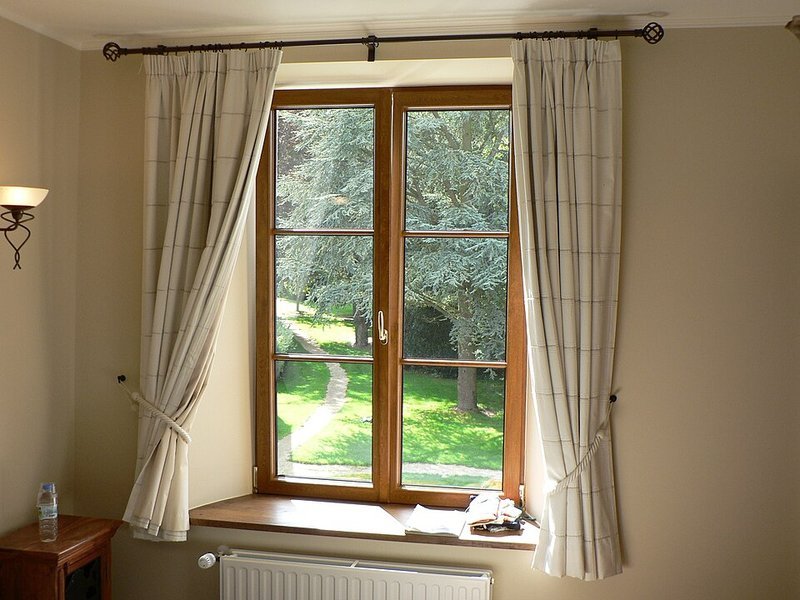
Curtains hung right at the window frame chop your wall in half and shrink the window. It is one of the most common small-room mistakes, and the fix costs nothing. Mount the curtain rod four to six inches above the window frame, close to the ceiling, and extend it eight to twelve inches wider than the frame on each side. The window suddenly looks taller and wider, the ceiling looks higher, and daylight floods in because the stacked curtains clear the glass instead of covering it.
Length matters just as much. Curtains should just kiss the floor or puddle slightly. The awkward floating length that stops a few inches short visually cuts the wall and makes the ceiling feel lower, which is exactly what you do not want. Choose a fabric close to your wall color for the most spacious effect, or go bold if the curtains are your statement piece. Either approach works for renters too, since a tension rod or removable hooks leave no damage, a trick covered in these rental-friendly tiny living ideas.
10. Keep a Table That Folds Away
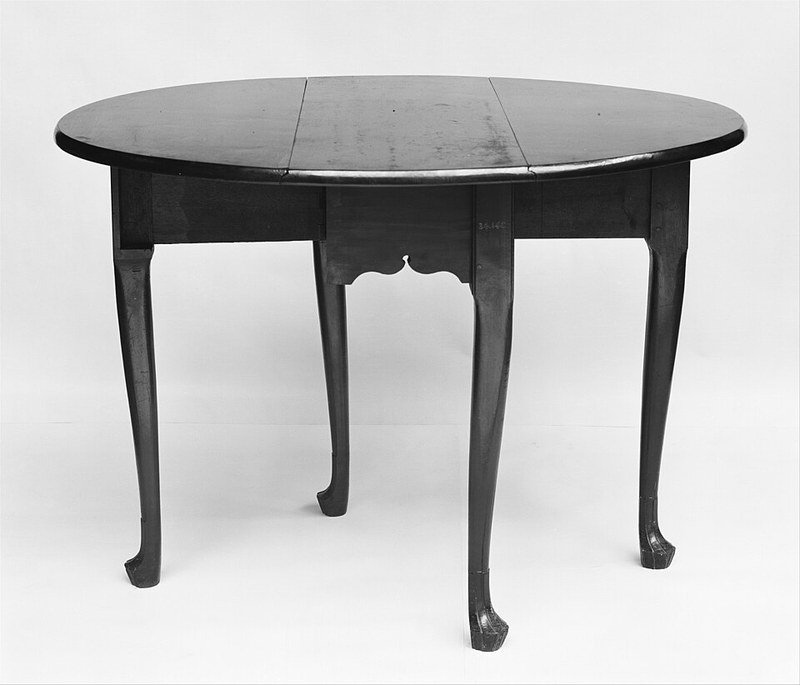
Some days you need a desk. Some days you need a dining table for four. In a tiny living room, those two days cannot each have their own furniture. A drop-leaf or folding table solves it: open the leaves when you need the surface, fold them down when you do not. Against the wall it becomes a slim console for keys and a lamp. Pulled out with the leaves up, it seats four for dinner or spreads out for a work-from-home day.
A wall-mounted drop-leaf is even better for tight rooms, since it disappears completely when folded and needs zero floor space. Pair it with folding or stackable chairs that tuck into a closet, and the whole dining setup vanishes when guests leave. If your living room flows into the cooking space, these tiny house kitchen ideas show how to keep that zone compact too. And for the rest of the small-space kit, from seating to storage, browse these affordable tiny house essentials before you buy anything full-size.
11. Take the Gallery Wall Up High
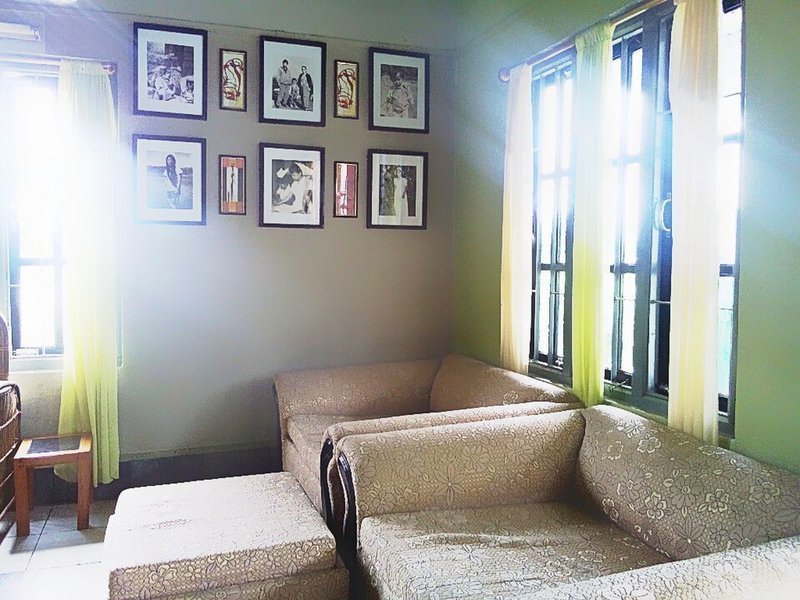
The wall space above eye level is the most wasted real estate in small living rooms. Most people hang one lonely frame at eye height and leave the upper half of the wall completely bare, which visually lowers the ceiling. A gallery wall that climbs toward the ceiling does the opposite. It pulls the eye upward, makes the walls feel taller, and turns empty drywall into the most interesting part of the room.
Keep the frames consistent, same color or same wood tone, and let the art vary. Matching frames make even a mixed collection of prints and photos look deliberate instead of chaotic, which matters when everything is close together. Start the arrangement just above the sofa back and build upward, not outward. Trace each frame on kraft paper and tape the shapes to the wall first, so you can perfect the layout without putting twenty nail holes in the plaster. Step back, squint, and check that the whole group reads as one shape before you commit.
12. Choose Leggy, See-Through Pieces
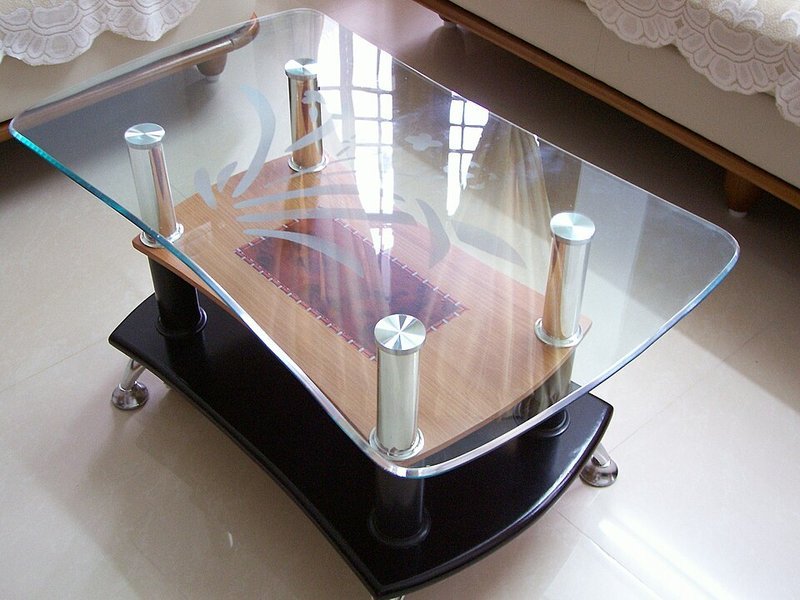
Here is a weird truth about small rooms: furniture you can see under and through looks like it takes up less space. A coffee table with slim raised legs lets your eye travel underneath it to the floor beyond, so the floor reads as continuous. A glass or acrylic top nearly disappears, keeping the sightline open from sofa to wall. The piece is physically there, but visually it barely registers, and in a tight room that illusion is worth a lot.
Apply the same thinking across the room. Sofas and armchairs on legs feel lighter than skirted bases that sit flat on the floor. Open-backed shelving beats a solid cabinet. The warning here is about the default choice: a chunky coffee table with a dark solid base is the single fastest way to make a small seating area feel cramped, because it plants a visual roadblock right in the middle of the room. Swap it for something leggy and the whole arrangement breathes again, with zero square feet gained and zero lost.
13. Carve Out a Reading Corner
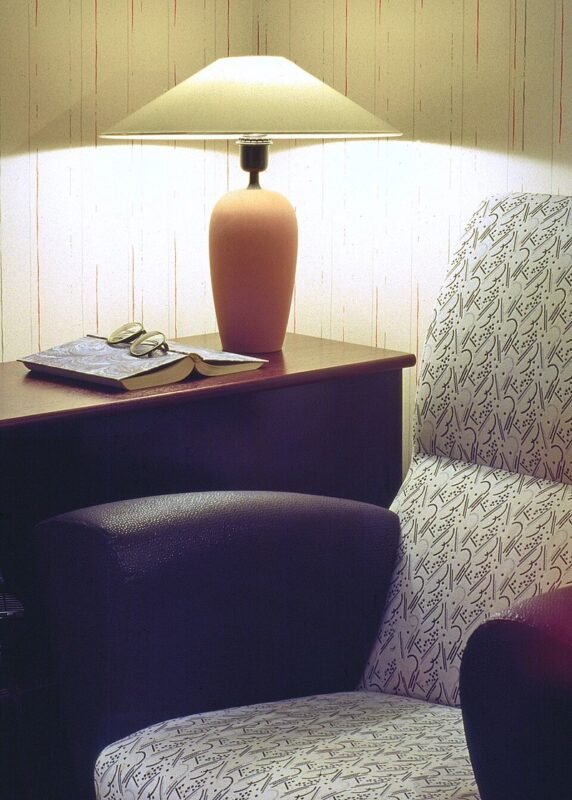
Every tiny living room has one dead corner where nothing happens. It collects dust, maybe a plant you forget to water, and a general sense of wasted potential. Turn it into a reading corner and that dead space becomes the most loved spot in the room. You do not need much: a comfortable armchair angled slightly into the room, a floor lamp with warm light behind or beside it, and a small side table for a book and a cup of tea.
The angle matters. Pull the chair a few inches away from the walls and turn it toward the room, and the corner feels like a destination instead of a punishment. A small basket beside the chair holds the current book and a throw, which keeps the corner tidy without any real effort. This is also the perfect place to use one standout piece, a chair with character or a great lamp, since a small vignette can handle more personality than a whole room. More corner-by-corner thinking like this lives in these small-space living hacks.
14. Hide the Clutter Behind Closed Doors
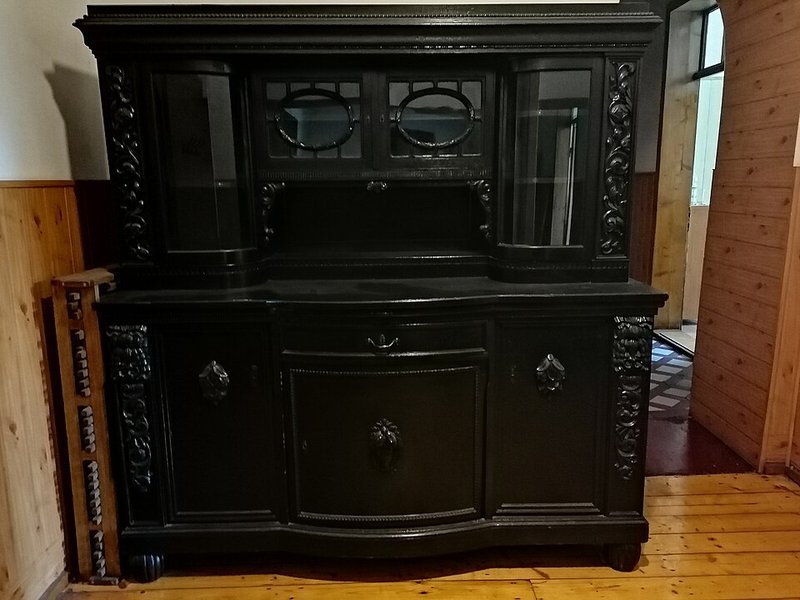
Open shelving photographs beautifully and lives terribly in a small room. Every object on an open shelf is visual noise, and in a compact space you sit close enough to see all of it, all the time. A styled shelf looks calm in a photo for exactly one afternoon. The rest of the year it collects the remote, the charger, the half-read mail, and the general drift of daily life. Closed storage forgives all of that instantly.
This does not mean everything must be a plain box. One closed cabinet or sideboard can hold the mess while a single open shelf above it shows off the pretty things: a plant, a framed photo, two or three books. The ratio is the trick. When ninety percent of your storage hides behind doors, the ten percent on display looks intentional instead of chaotic. And here is the warning worth hearing: buying pretty baskets for open shelves does not fix clutter, it just organizes it where you can still see it. Doors fix it.
15. Bring In Something Green
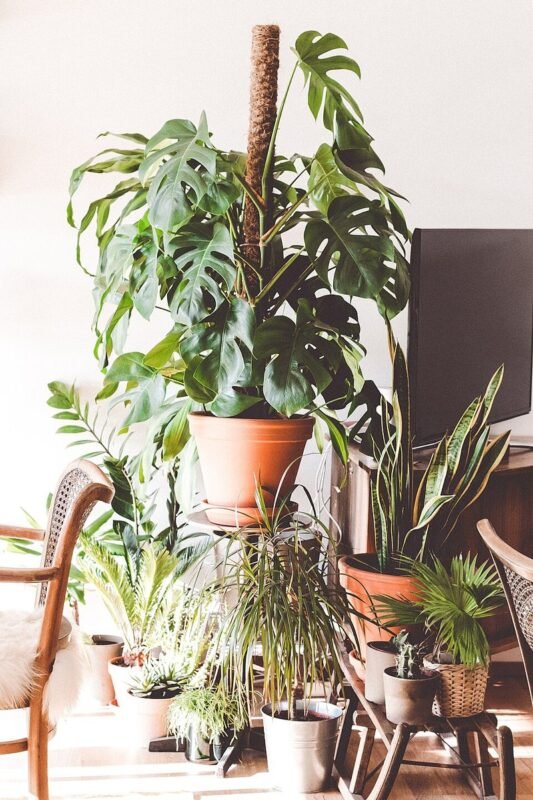
A plant is the cheapest way to make a room feel alive, and small rooms need that most. Without something living in it, a compact space can feel like a very tidy box. One plant breaks the geometry: soft leaves against straight walls, a bit of wildness against all the right angles. You do not need a jungle. In fact, one confident plant beats six struggling ones, especially when floor space is limited and every pot needs a home.
Start with something forgiving if your track record with plants is mixed. A snake plant or pothos survives low light and forgetful watering, and both look good in a simple pot on the floor or a shelf. Hang one trailing plant near the window and it adds greenery without using a single inch of floor. Group plants at different heights, floor, shelf, hanging, and the corner feels lush instead of crowded. Wipe the leaves now and then. In a small room you sit close enough to notice the dust, and clean leaves catch the light beautifully.
16. Layer Textiles Until It Feels Like a Hug
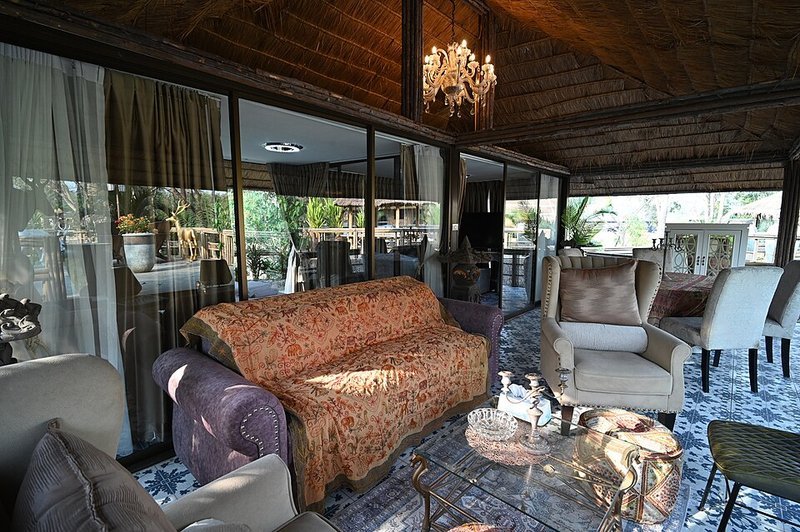
Small rooms can handle coziness better than big rooms can. A large living room needs restraint to avoid feeling empty, but a tiny one needs softness to avoid feeling hard. This is where textiles do their quiet work: a throw over the sofa arm, cushions in two or three textures, a rug with some pile underfoot, curtains with actual weight to them. None of these take floor space. All of them make the room feel warmer the moment you walk in.
Mix the textures instead of matching everything. Linen, knit, velvet, and wool in the same color family look rich and collected, while a matching five-piece cushion set looks like a showroom. Odd numbers help: three cushions on a loveseat, one folded throw, not pairs of everything. And do not skip the rug pad. A thin pad under the rug adds a cushioned step that makes the whole room feel softer and keeps the rug from sliding, which is a small luxury you will notice every single day.
Final Thoughts
A comfortable tiny living room is not about one magic purchase. It is about a dozen small decisions that all point the same way: furniture that fits and multitasks, light that layers instead of blares, walls that stay bright, and storage that hides the mess of real life. Start with the two or three ideas that fix your biggest annoyance, whether that is the TV dominating the room or the lighting making it feel flat. You will feel the difference immediately, and the rest can follow one weekend at a time. Small rooms reward attention more than money, and yours is closer to cozy than you think.