
Living in a small space does not mean skipping Christmas. It just means getting smarter about where the holiday goes. A full-size tree might eat half your living room, but a tabletop tree, a glowing window, and a garland on a shelf can make 400 square feet feel every bit as festive as a farmhouse. These 17 ideas are built for apartments, tiny homes, and cozy rentals. Each one is low on floor space, easy on the budget, and simple to pack away in January.
1. Put a Tabletop Tree on Your Side Table
Some of the prettiest Christmas trees I have seen stood barely two feet tall. A tabletop tree gives you the full ritual, unboxing ornaments, winding lights, placing the star, without surrendering a corner of your living room. Set it on a side table, a bookshelf, or even a sturdy windowsill where it catches the light.
Pick a tree between 18 inches and 3 feet tall and decorate it with mini ornaments, which are sold in craft stores every November. Because the tree sits at eye level, it actually shows off your ornaments better than a big tree does. A small tree also costs less to light: one 50-count string of warm white LEDs is plenty.
Storage is the quiet win here. After the holidays, the whole tree, ornaments and all, can slide into a plastic tote or a spare pillowcase and live on a closet shelf. If you buy an artificial one, fluff the branches once when you unbox it and it will look fuller every year. For a real-tree scent without the needles, tuck a cinnamon-scented pinecone or two around the base.
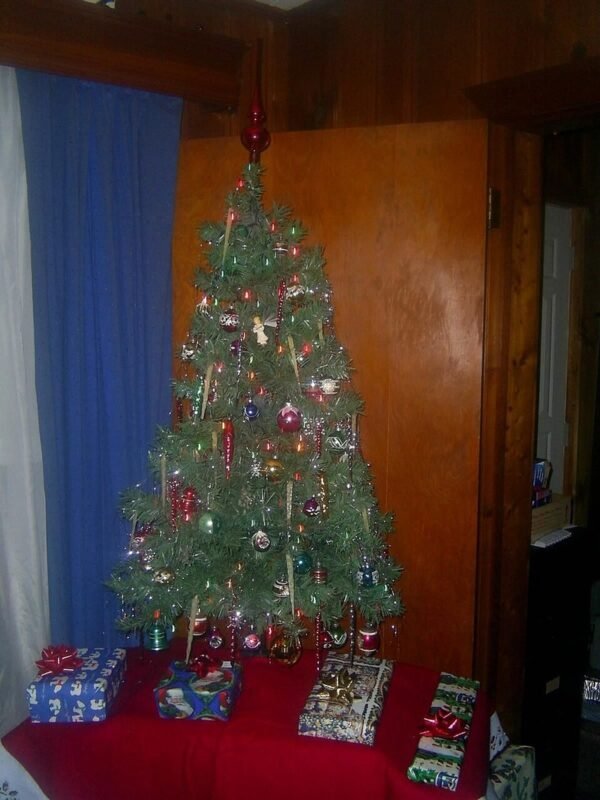
2. Tuck a Slim Tree Into an Unused Corner
Here is the thing about corners: they are dead space in most small rooms, which makes them perfect for a slim or pencil tree. These narrow trees are usually 3 to 5 feet tall but only about 20 inches wide at the base, so they slide into spots where a regular tree would block a walkway.
Push the tree right into the corner and decorate only the front two-thirds. Nobody sees the back, so save your ornaments and your money. A tree skirt is optional in tight quarters; a woven basket or a galvanized bucket hides the stand and looks intentional.
One warning: measure your ceiling before you buy. Pencil trees come in tall versions that can brush a low apartment ceiling, and a bent treetop looks sad all season. A 4-foot tree suits most rentals. Pair it with a few pieces of space-saving furniture and the corner becomes a proper holiday nook instead of an afterthought. These DIY tiny living furniture ideas can help you squeeze even more function out of the same square footage.
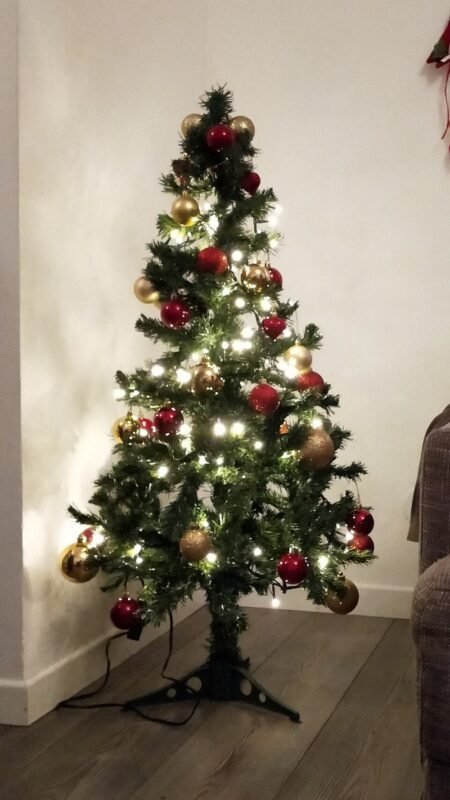
3. Dress the Mantel, or Fake One With a Shelf
A garland-draped mantel is the fastest way to make a room read as Christmas, and you do not need a fireplace to have one. If your rental has no mantel, mount a simple floating shelf at mantel height, roughly 48 to 54 inches off the floor, and treat it exactly the same way.
Drape a faux garland across the shelf and let the ends trail down both sides. Tuck in a few pinecones, tuck in some battery-operated fairy lights, and hang three or four stockings from the front edge with small hooks. The whole setup is about six inches deep, so it never interferes with the room.
Practical tip: use removable adhesive hooks rated for at least 3 pounds if you are hanging anything heavier than ribbon. Landlords notice nail holes; they rarely notice a hook that came off cleanly in January. If you want the look without buying a shelf, the top of a bookshelf or a radiator cover works the same way. Renters in particular should browse these rental-friendly tiny living ideas for more damage-free decorating tricks.
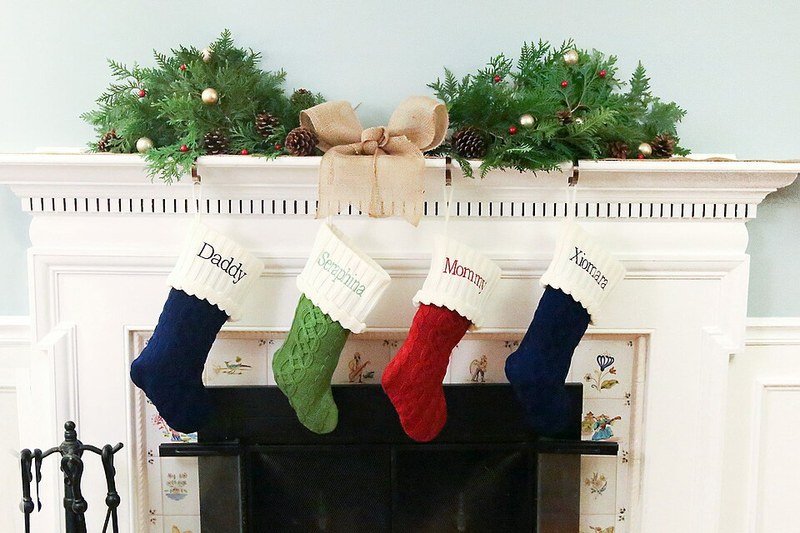
4. Hang Stockings Without a Fireplace
No fireplace? No problem. Stockings do not need a mantel; they need a horizontal surface and a hook. Hang them from a bookshelf edge, a stair railing, a wall-mounted coat rack, or even a row of adhesive hooks on an empty stretch of wall.
The trick is keeping them light. Heavy knit stockings stuffed with gifts will pull adhesive hooks right off the paint, so fill them with flat treats, gift cards, and small wrapped candies instead. Save the heavy presents for under the tree. Space the stockings about 8 inches apart so each one reads as its own little display rather than a crowded row.
For a cleaner look, hang all the stockings at exactly the same height using a strip of painter’s tape as your guide, then peel the tape away. Kids love this tradition most of all, so let them pick their own hook spot. A hallway wall or the side of a wardrobe becomes a memory-making spot for about five dollars in hooks.
5. Make an Advent Wreath Your Centerpiece
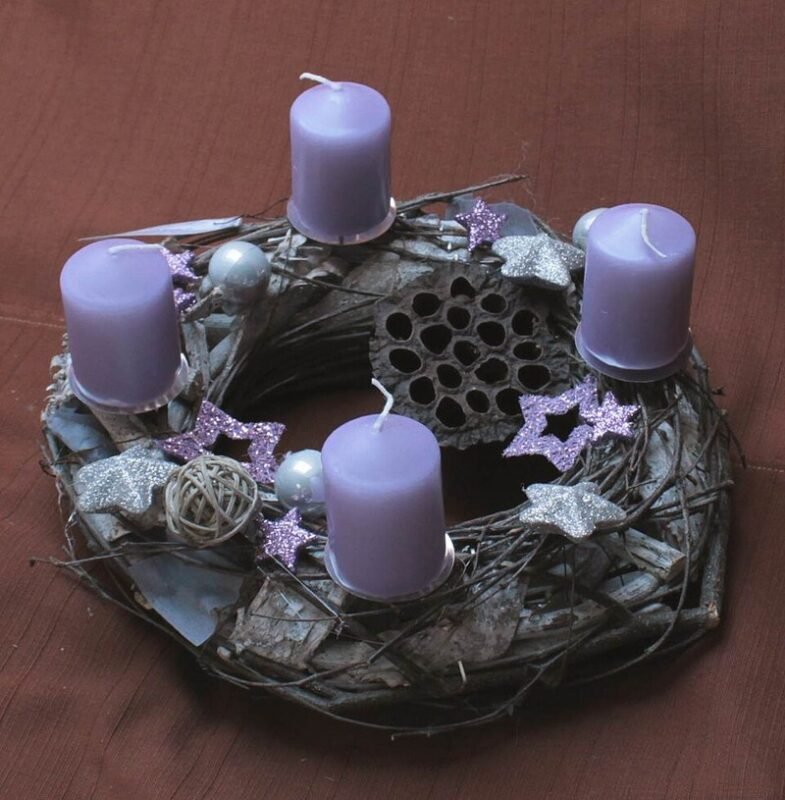
A single candle on a side table is nice. Four candles arranged in a wreath, lit one more each Sunday of December, becomes a ritual the whole household looks forward to. An advent wreath takes up about 12 inches of table space and doubles as your centerpiece for the entire month.
You can buy a simple grapevine or faux-greenery wreath base and press four pillar or taper candles into it. Traditional colors are purple and pink, but white or red candles match any decor scheme. Each Sunday evening, light one more candle than the week before. It is a small ceremony that costs nothing and feels like a lot.
A word of caution for tiny homes: real flames and tight quarters demand respect. Never leave the wreath burning unattended, keep it clear of curtains and low shelves, and consider LED taper candles if you have curious pets or toddlers. The flameless versions now flicker convincingly and run for weeks on a set of batteries.
6. Hang a Star in the Window
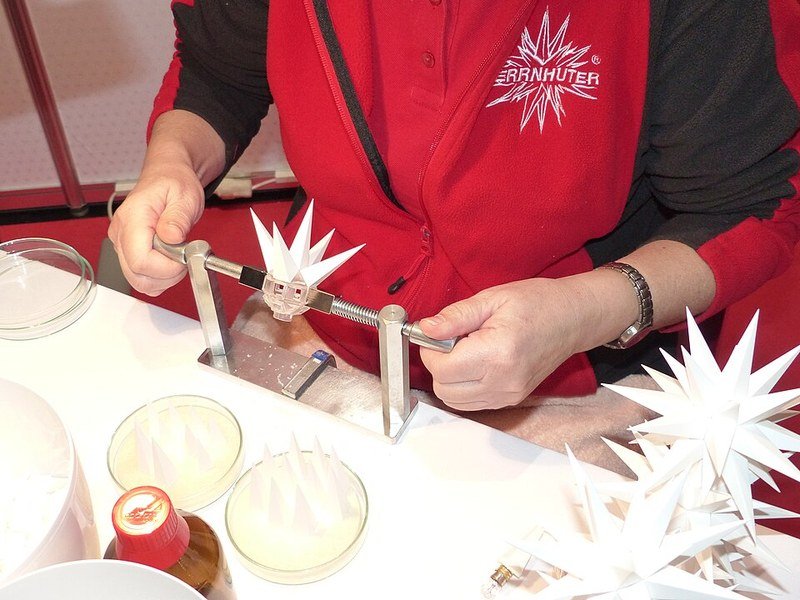
Windows are free real estate in a small home, and a glowing star in the window delivers maximum Christmas feeling for zero floor space. Paper star lanterns, the folding kind with many points, cast a warm glow that looks beautiful from inside and turns your home into a postcard from the street.
Hang the star from a small suction-cup hook or a removable adhesive hook at the top of the window frame. Most paper stars are lightweight, so even the cheapest hook holds them. Plug-in versions with a long, thin cord work best; run the cord down the window frame and secure it with clear clips so it does not dangle across the room.
Size matters here. A star around 18 to 24 inches across suits a standard apartment window. Go bigger and it blocks your daylight all December; go smaller and it disappears. If you hang one star in each street-facing window, the effect from outside is genuinely striking, and your neighbors will notice.
7. Drape Fairy Lights Wherever They Fit
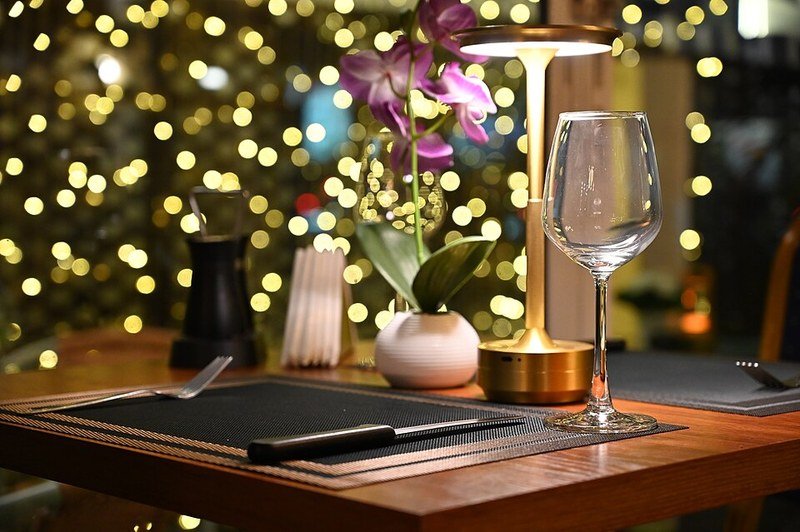
Ask any small-space dweller what changed their holiday setup the most, and the answer is almost always fairy lights. Those thin copper-wire strands with tiny LEDs go places regular string lights cannot: along a bookshelf edge, around a mirror frame, woven through a headboard, or coiled inside a glass vase.
Battery-operated strands are the small-home hero because they need no outlet and no cord snaking across the floor. A 33-foot strand with 100 lights costs a few dollars and runs for days on three AA batteries. Tuck the battery pack behind a book or inside the vase and the whole thing looks cordless.
This is also where Apartment Therapy’s small-space Christmas guide lands: in a tiny room, light does more decorating work than objects do. One practical note: stick to warm white for a cozy feel. Cool white reads as office lighting and fights the holiday mood. Timer-equipped strands that switch themselves on at dusk are worth the extra dollar.
8. Let Warm White Lights Do the Heavy Lifting
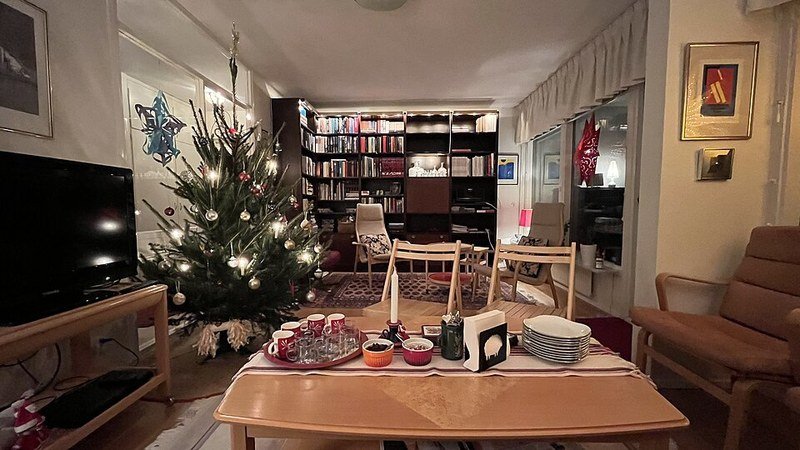
Here is a decorating secret that professional stylists use in small rooms: one great strand of warm white lights beats a pile of mediocre decorations. Light draws the eye, hides clutter in shadow, and makes even a sparse tree look intentional and full.
If your tree looks thin, the problem is usually lighting, not ornaments. Wrap lights deep inside the branches first, then add a second pass near the tips. This layering creates depth that a single outer wrap cannot match. For a 4-foot tree, 100 to 150 lights is the sweet spot.
The same principle works beyond the tree. A strand of warm white lights along the top of a bookshelf, under a kitchen cabinet, or around a bedroom mirror adds holiday glow without adding a single object to dust or store. And in January, you can leave the shelf lights up as everyday ambient lighting. Few decorations pull double duty this well, so invest in lights with a good warranty rather than the cheapest box.

9. Cluster Candle Lanterns on One Tray
Candles beat overhead lighting every single time, but a dozen candles scattered around a tiny room means a dozen things to knock over. The fix is a tray. Group three to five lanterns or pillar candles of different heights on one tray, and you get a glowing focal point with a footprint of about one square foot.
Place the tray on a coffee table, a sideboard, or the dining table. A tray with raised edges is safest because it catches drips and keeps everything contained when you need to move it for dinner. Mix heights for visual interest: a tall lantern, a medium pillar, and a short votive is a combination that never fails.
In rentals and homes with kids, flameless LED candles are the sane choice, and the good ones now have realistic flicker and timers. Surround the candles with a few sprigs of faux greenery or a handful of pinecones to fill the gaps. When the season ends, the whole tray lifts away as one unit and goes straight into storage. These small space living hacks have more ideas for getting big impact out of small surfaces.

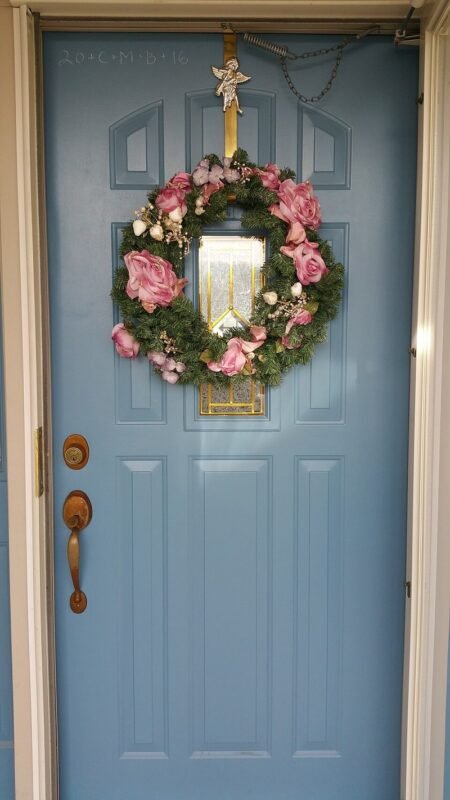
10. Greet Guests With a Wreath on the Door
Your front door is the first hello of the holiday season, and a wreath takes up exactly zero indoor space. A classic green wreath with a simple bow suits almost any door, and it signals Christmas to everyone who walks past, which matters when your indoor decorating is necessarily modest.
Apartment dwellers, do not skip this one. If your building rules forbid door decorations, hang the wreath on the inside of your front door instead, where you see it every time you come home. A wreath also looks great hung on an interior wall, over a mirror, or on a bedroom door.
Use an over-the-door wreath hanger or a large removable hook so you do not damage the paint. Fresh wreaths smell wonderful but shed needles; faux wreaths look good for a decade and store flat in a garment bag. If you have a porch, stoop, or balcony, flank the door with two small potted evergreens for a finished entry. For more ways to use compact outdoor areas, see these tiny living outdoor space ideas.

11. Build a Mini Village on a Bookshelf
Remember those little ceramic villages with the glowing windows? They were made for small spaces. A miniature Christmas village turns the top of a bookshelf, a sideboard, or a wide windowsill into a whole holiday scene without touching the floor at all.
Start with three to five pieces rather than a sprawling set. A church or town hall, two houses, and a few bottle-brush trees make a complete scene on a two-foot shelf. Lay down a strip of white felt or cotton batting as snow, nestle battery tea lights behind the buildings so the windows glow, and you are done.
The beauty of a village is that it grows slowly. Add one new piece each year instead of buying a boxed set, and the collection becomes a personal tradition. In January, wrap each piece in tissue and nest them in a single shoebox. They take up almost no storage space, which is the whole point. If you love the tiny-living mindset behind this, these affordable tiny house essentials will stretch your budget further.

12. Style One Candlelit Table Centerpiece
When floor space is gone, the dining table becomes your decorating stage. One well-styled centerpiece does more for a small room than decorations scattered on every surface, because it gives the eye a single place to land.
Build it on a tray or a low wooden board so you can lift the whole thing away at mealtime. Arrange three candles of different heights, tuck pinecones and faux berries around their bases, and add a few sprigs of greenery to fill the gaps. Keep the total height under 12 inches so people can still see each other across the table.
This is also the perfect spot to use the good dishes you already own. A red runner or a piece of plaid fabric underneath the tray adds color without buying anything new. If your table doubles as a desk or craft space, the lift-away tray keeps the holidays from interfering with daily life. Small kitchens benefit most from this contained approach, and these tiny house kitchen ideas show how to keep compact cooking spaces working hard through the holidays.

13. Craft Simple Handmade Ornaments
Store-bought ornaments are fine, but handmade ones solve two small-space problems at once. Felt, fabric, and paper ornaments weigh almost nothing, so they will not drag down the branches of a tabletop or slim tree, and they store flat in an envelope instead of a bulky divided box.
Cut simple shapes from felt: stars, hearts, mittens, tiny trees. A blanket stitch around the edge, a bit of stuffing, and a ribbon loop are all it takes, and each one costs pennies. Kids can safely help with the cutting and stuffing, which makes this a genuine family activity rather than a decorating chore.
Warning: skip the glitter if your tree sits near anything you love. Glitter migrates across a small room with shocking speed and you will find it in March. Stick to felt, ribbon, and wooden beads for a handmade look that stays where you put it. Date the back of one ornament each year and you will have a timeline of Christmases that takes up less space than a paperback book.

14. Decorate One Corner and Call It Done
You do not have to decorate the whole house. In a small home, one beautifully styled corner beats thin decorations spread everywhere, because a single rich vignette reads as intentional while scattered bits read as clutter.
Pick the corner you see most: the one facing your sofa, or beside the dining table. Put your tree or your lighted branches there, add a throw blanket in a holiday color over the nearest chair, set a candle on the side table, and stop. When every element sits within one sightline, the whole room feels decorated even though you only touched a few square feet.
This approach also protects your budget and your storage space. One corner needs one box of decorations, not five. Give yourself permission to leave the bedroom, the bathroom, and the hallway completely alone. The holidays are supposed to lower your stress, not reorganize your closets.
15. Hang a Fresh Greenery Wreath Indoors
A plain green wreath might be the hardest-working decoration in this whole list. It needs no outlet, no floor space, and no assembly. Hang it on a living room wall, over a mirror, on the back of a door, or in front of a window, and the room instantly smells and looks like December.
Fresh wreaths bring the pine scent that artificial decor cannot fake, and a simple undecorated one costs less than most ornaments. Mist it lightly every few days to slow the drying, and keep it away from heating vents, which turn a fresh wreath crispy in a week. When it starts to shed, move it to the front door for its final act.
If anyone in the house has pine allergies, a good faux wreath is the answer. Fluff it well when it comes out of the box, add a cinnamon-scented pinecone nearby for the smell, and nobody will know. Either way, one wreath on an interior wall does the work of a dozen smaller decorations.
16. Set Up a Tiny Holiday Treat Station
The kitchen counter in a tiny home is usually too precious for pure decoration, so make your decor edible. A small tray with a jar of cocoa mix, a stack of mugs, and a plate of cookies decorates the counter and gets used every single day of December.
Keep the footprint tight: one tray, roughly 12 by 18 inches, holds everything. A glass jar of marshmallows, a tin of cookies, and two festive mugs look abundant without sprawling. Add a small chalkboard or a handwritten tag that says cocoa bar and it feels deliberate rather than messy.
Restock the tray weekly and it stays fresh all month. This is also a lovely low-pressure way to host: when a friend drops by, the cocoa station is already set and you look like a person who plans ahead. In January, the tray goes back to holding fruit or mail, and nothing needs storing except the mugs.

17. Let Wrapped Gifts Be the Decor
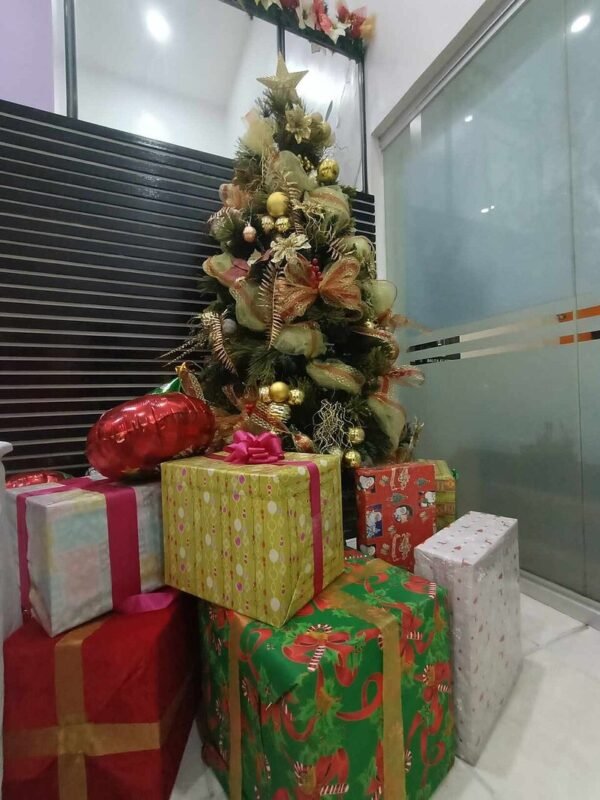
My favorite budget trick of all: wrap empty boxes. A stack of beautifully wrapped boxes under or beside your tree looks abundant and festive weeks before the real gifts are ready, and it costs almost nothing if you buy wrapping paper after Christmas on clearance.
Choose two or three coordinating papers, not ten different ones, so the stack looks styled rather than random. Vary the box sizes and tie a few with ribbon or twine. Place the tallest boxes at the back and step them down toward the front, like a little skyline of presents.
Practical note: label the bottom of each fake box so you do not hand someone an empty one on Christmas morning. It happens more often than you would think. When the holiday ends, flatten the boxes and save the paper for next year. This kind of make-do creativity is what small-space living rewards, and keeping your holiday spending lean means January starts calm instead of stressful.
Final Thoughts on Small Space Christmas Decor Ideas
Small-space Christmas decorating is not about doing less of everything. It is about choosing the few things that matter most and giving them a proper stage. A tabletop tree at eye level, a glowing window, one rich corner, and a tray of candles will make your home feel more festive than a big house decorated halfway.
Start with the ideas that cost you nothing: rearrange what you own, hang the lights you already have, and wrap a few empty boxes. Add one new piece each year instead of buying everything at once, and store it all in a single clearly labeled tote. By next December, setup will take an afternoon instead of a weekend.
However small your home is, it is big enough for Christmas. Pick three ideas from this list, try them this weekend, and enjoy a holiday season that fits your space and your life.