
20 Modern Victorian Kitchen Styles That Turn Tradition into Trend
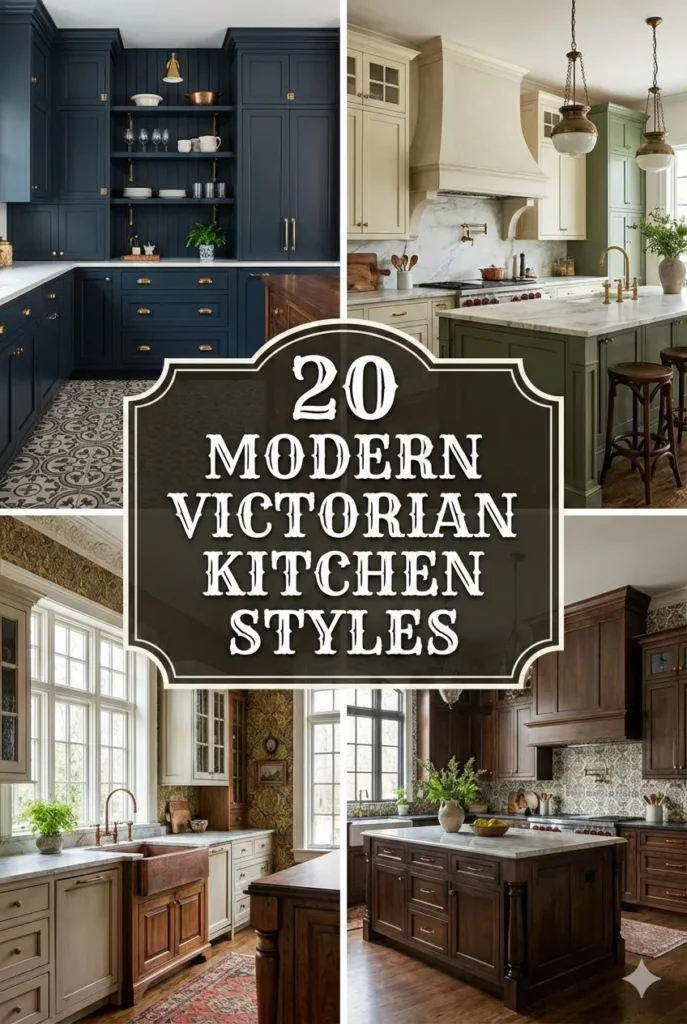
The kitchen is often considered the heart of the home, but for decades, modern design trends have stripped it of character in favor of stark minimalism. However, a significant shift is occurring in the world of interior design. Homeowners are looking back to the 19th century to reclaim warmth, detail, and craftsmanship. The result is the Modern Victorian kitchen, a stunning hybrid that respects the architectural integrity of the past while embracing the convenience and clean lines of the present.
This design philosophy is not about creating a museum exhibit. Instead, it is about blending the ornate with the functional. We are seeing a resurgence of rich textures, moody color palettes, and intricate millwork paired effortlessly with state of the art appliances and smart layouts. By marrying the romanticism of the Victorian era with contemporary sensibilities, you create a space that feels both timeless and lived in. Below are twenty unique interpretations of this style that demonstrate how you can transform your culinary space into a masterpiece of historical fusion.
1. Marble Majesty Elegance

There is perhaps no material that signifies Victorian luxury quite like marble. In a modern context, the key is to use this stone as a bridge between eras. To achieve the Marble Majesty look, focus on high contrast veining found in Calacatta or Statuario marble. Instead of simple countertops, consider a seamless transition where the marble flows from the counter up the wall to create a full height backsplash.
To keep this from feeling too dated, ensure the edge profiles of the marble are square or eased rather than an ornate ogee edge. This sharp geometry introduces a contemporary feel. Pair the stone with dark walnut cabinetry that features traditional raised panel doors. The heavy wood grounds the airy brightness of the marble. For hardware, unlacquered brass acts as the jewelry of the room, aging over time to develop a patina that feels authentic to the 19th century. This style is perfect for those who want a bright, expansive kitchen that still feels historically rooted.
2. Rococo Revival Charm
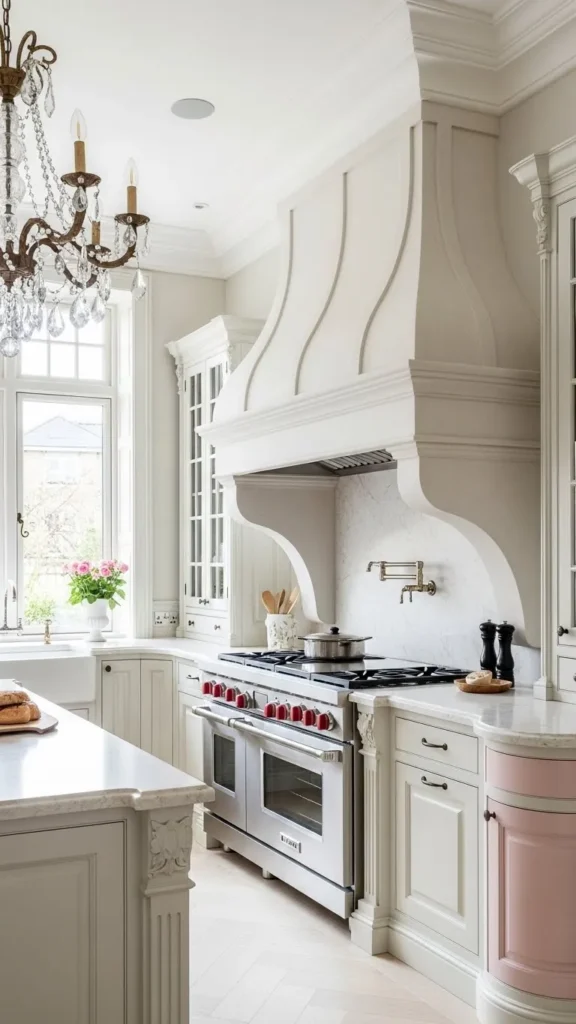
Rococo design is characterized by lightness, asymmetry, and decorative curves. Bringing this into a modern kitchen requires a delicate balance so the room does not feel cluttered. The focus here should be on the cabinetry and ceiling details. Look for cabinet doors that feature slight curvature or intricate beadwork rather than standard shaker styles. A pale, chalky palette of soft pinks, creams, or powder blues works best to capture the playful spirit of Rococo.
The modern twist comes in the form of lighting and seating. Instead of heavy antique furniture, use acrylic or lucite bar stools to create a “ghost” effect that lets the cabinetry shine. Install a modern crystal chandelier that mimics organic shapes but uses LED technology for a cleaner glow. You can also introduce a plaster range hood with a curved silhouette to pay homage to the ornamental plasterwork of the past without overwhelming the eye. This style suits the homeowner who loves romance and whimsy but needs a practical workspace.
3. Gothic-Inspired Culinary Retreat
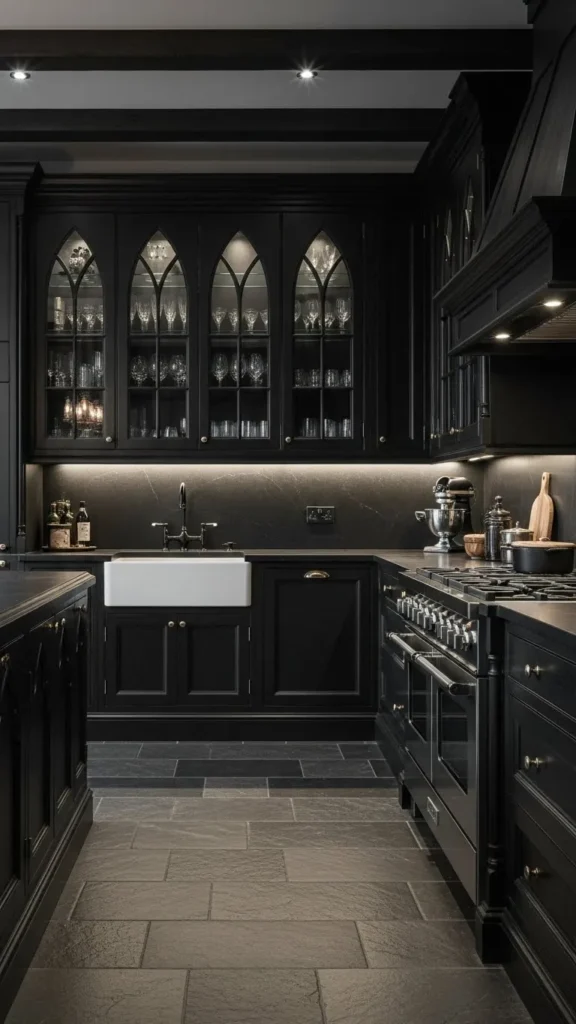
For those who prefer a moodier aesthetic, the Gothic Revival offers a dramatic solution. This style is defined by vertical lines, pointed arches, and a darker color palette. Start with cabinetry painted in charcoal black or deep forest green. If your architectural structure allows, incorporate pointed arch motifs into glass cabinet doors or open shelving units.
To modernize this intense look, utilize matte finishes rather than glossy ones. A matte black faucet and a granite composite sink keep the vibe sleek and industrial. Concrete flooring or large format slate tiles can replace traditional wood floors to add a raw, modern edge. Lighting is crucial here to prevent the room from feeling like a dungeon. Use under cabinet lighting and sleek, linear suspension lights to wash the dark surfaces with warmth. The result is a kitchen that feels cozy and enclosed, perfect for intimate cooking sessions, yet undeniably edgy and cool.
4. Baroque Meets Minimalism Kitchen

Baroque design is known for its grandeur, drama, and movement, while minimalism is known for its stillness. merging these two seems impossible, but the contrast creates electricity. The secret lies in choosing one “hero” Baroque element and keeping everything else strictly minimal. For instance, you might install an incredibly detailed, carved kitchen island with lion claw feet and gold gilding.
Surround this centerpiece with flat panel, handleless cabinetry in a stark white or matte grey. The walls should be free of clutter, perhaps featuring a hidden storage system to keep countertops completely bare. This allows the eye to rest solely on the ornate island. Flooring should be simple, such as polished concrete or a light oak, to maintain the minimalist backdrop. This approach turns your kitchen furniture into art, celebrating the craftsmanship of the Victorian age without sacrificing the clean visual space required for a modern mind.
5. Subtle Gold Glam Kitchen

Victorian interiors were often embellished with gold to catch the flickering light of candles and gas lamps. In the Subtle Gold Glam kitchen, we translate this into champagne bronze and brushed gold accents that warm up a neutral space. Start with a foundation of warm greige or taupe cabinetry, which serves as a sophisticated middle ground between historic beige and modern grey.
The gold elements should be rhythmic. Introduce gold mesh inserts in upper cabinet doors, gold trim on the range hood, and a gold pot filler behind the stove. To prevent the look from becoming tacky, ensure all gold finishes match perfectly in tone. Pair these metals with a quartz countertop that has warm gold veining. This style is less about showing off wealth and more about creating a glowing, inviting atmosphere that mimics the golden hour of sunlight all day long.
6. Emerald Luxe Cooking Space

Deep jewel tones were a hallmark of the mid to late Victorian era. Emerald green is particularly effective in a kitchen because it connects the indoors with nature. For an Emerald Luxe look, commit to painting all cabinetry, and perhaps even the walls, in a rich, saturated emerald hue. This monochromatic approach is a very modern design tactic that envelops the viewer.
To break up the green, introduce elements of natural wood, such as a butcher block island top or open oak shelving. This adds an organic texture that prevents the room from feeling too heavy. For the backsplash, use glazed zellige tiles in a slightly lighter shade of green; their uneven surface reflects light beautifully, adding depth and texture. finish the look with polished nickel hardware, which pops crisply against the dark green, providing a cool contrast to the warm, enveloping color.
7. Rocaille Accent Kitchen

Rocaille refers to the rock and shell motifs often found in Rococo and Victorian ornamentation. In a modern kitchen, this translates to texture and organic shapes. Instead of literal shell carvings, use scalloped edges on your backsplash tiles or a fluted design on the front of your farmhouse sink. These subtle curves soften the rigid straight lines of modern appliances.
The color palette should remain inspired by the sea and stone, utilizing soft greys, sand tones, and muted aquas. A standout feature for this style is a custom range hood with a stucco or plaster finish that mimics the texture of natural stone. Combine this with light, bleached wood flooring laid in a herringbone pattern to add geometric interest that complements the organic “rocaille” details. This kitchen feels breezy and coastal but retains a deep sense of historical sophistication.
8. Noir Victorian Contrast Kitchen

The Noir Victorian style is for the bold. It relies heavily on the power of black and white, a classic combination that transcends time. However, unlike a standard modern black and white kitchen, this style relies on Victorian silhouettes. Use black cabinetry with heavy molding profiles and glass fronts that display antique china or white ceramic ware.
The contrast comes from white marble countertops and a subway tile backsplash laid in a unique pattern, such as a basketweave or vertical stack. To truly capture the Victorian vibe, consider a checkered floor, but update it by using large format marble tiles instead of small linoleum squares. Lighting should be industrial yet ornamental, such as black metal pendants with Edison bulbs. This high contrast look is sharp, photographic, and incredibly tidy, making it ideal for the organized home chef.
9. Bold Royal Blue Kitchen

Blue was a popular color in Victorian interiors, representing status and calm. A Bold Royal Blue kitchen takes this concept and amplifies the saturation for the modern eye. Use a high gloss finish on royal blue cabinets to reflect light and make the space feel larger and more contemporary. The gloss finish acts as a lacquer, which was common on high end Victorian furniture.
Balance the intensity of the blue with crisp white walls and white quartz countertops. To bring in the “tradition,” incorporate a ladder system for high upper cabinets, reminiscent of old libraries or sculleries. The hardware should be substantial, perhaps oversized knobs or bin pulls in a burnished silver finish. This kitchen style is energetic and confident, perfect for families who want a space that feels alive and vibrant rather than sterile.
10. Satin Sheen Cooking Room

Sometimes, the texture of the paint is just as important as the color. A Satin Sheen Cooking Room focuses on the tactile experience of the space. Victorian homes often used oil based paints that had a distinct, smooth glow. Replicate this with modern satin or eggshell finishes on cabinetry in muted, dusty colors like sage, mushroom, or dove grey.
The goal is softness. Avoid sharp edges on countertops; choose a bullnose edge instead. Use curtains or fabric shades on the windows rather than modern blinds to add softness and sound absorption. A vintage style rug in the center of the kitchen adds a layer of pattern and warmth. The appliances should be panel ready, hidden behind cabinet doors to maintain the unbroken, soft visual line. This kitchen is a sanctuary, designed for slow cooking and quiet mornings.
11. Tufted Comfort Kitchen Nook

The Victorian era is famous for its upholstery, specifically deep button tufting. Bringing this into the kitchen creates a hybrid space that encourages lingering. Create a built in banquette or breakfast nook featuring velvet or leather upholstery with diamond tufting. This soft seating area contrasts beautifully with the hard surfaces of a functional kitchen.
Pair this nook with a pedestal table that has a heavy, turned wood base. The kitchen cabinetry surrounding this area should be simple to let the seating be the focal point. However, you can tie the two zones together by using the same wood stain on the banquette trim as the kitchen island. Add a small, ornate chandelier directly above the table to define the zone. This style acknowledges that the modern kitchen is a social hub, not just a utility room.
12. Crystal Glow Kitchen

Victorian lighting was revolutionary, transitioning from candle to gas to electric. Crystal chandeliers were the ultimate status symbol. In the Crystal Glow Kitchen, lighting is the primary architectural feature. Install a statement crystal chandelier over the island, but choose a fixture with a modern geometric shape or smoked glass crystals to avoid looking like a ballroom.
Reflect this sparkle with mirrored backsplashes or antique mirror inserts in cabinet doors. This expands the visual space and bounces light into dark corners. The cabinetry should be painted in a deep, light absorbing color like navy or charcoal to allow the crystal elements to pop. Chrome hardware complements the glass and crystal, creating a cool, icy aesthetic that feels incredibly luxurious and high end.
13. Orchid Opulence Kitchen

Victorian collectors were obsessed with exotic flora, particularly orchids. This style draws inspiration from the vibrant purples, pinks, and fuchsias of these flowers. While painting an entire kitchen purple might be overwhelming, use it as an accent on a large island or a butler’s pantry. Keep the perimeter cabinets a soft cream or white.
Incorporate botanical prints through wallpaper or framed art. A feature wall with a William Morris style wallpaper print involving orchids and vines brings the garden inside. To modernize this, ensure the wallpaper has a large scale print rather than a busy, small pattern. pair this with light colored stone countertops and porcelain sinks. This kitchen feels fresh, organic, and distinctly feminine, celebrating the Victorian love for botany.
14. Mosaic Masterpiece Kitchen

Flooring in Victorian public buildings and entryways often featured intricate mosaic tile work. The Mosaic Masterpiece Kitchen brings this art form to the forefront. Install a custom mosaic floor pattern using small hexagon or penny tiles. You can create borders, floral motifs, or even write words, giving the floor a personalized, historic feel.
Because the floor is busy and visually demanding, the rest of the kitchen must remain calm. Use slab front cabinetry or very simple shaker doors in a solid neutral tone. A solid slab backsplash without grout lines ensures the room doesn’t feel too grid heavy. This design choice flips the traditional hierarchy of a room, making the floor the star and the walls the supporting actors, a bold move that pays off in visual interest.
15. Azure Aristocracy Kitchen

Azure is a lighter, sky like blue that evokes a sense of airiness and French Victorian influence. This style is about creating a cloud like atmosphere. Paint cabinets in a pale azure and pair them with white marble that has heavy grey veining. The distinct Victorian element here is the use of glass.
Incorporate leaded glass cabinet doors or stained glass transoms above doorways. The lead lines add a graphic, historic element. To modernize, use open shelving with brass brackets to display everyday dishware, keeping the space feeling casual and accessible. A farmhouse sink is a must for this style, bridging the gap between old world utility and modern farmhouse trends. It creates a serene, happy space that feels bathed in natural light.
16. Plush Purple Kitchen Accent

Purple was a color of royalty and mourning in the Victorian era, heavily used in velvet drapery. To modernize this, use a deep plum or eggplant shade as a sophisticated accent. This works exceptionally well on a standalone piece of furniture, like a hutch or a pantry cupboard, while keeping the main kitchen cabinetry natural wood or grey.
Texture is key here. Contrast the smooth paint with rough hewn beams or a brick backsplash painted white. The “plush” aspect can be introduced through bar stools upholstered in performance velvet. Copper cookware displayed on a hanging rack adds a warm metallic tone that complements the purple perfectly. This style is eclectic and rich, appealing to those who want a kitchen with a strong personality and a departure from standard neutrals.
17. Midnight Blue Statement Kitchen

Midnight blue is almost black, but with a depth that black lacks. It captures the moody atmosphere of a Victorian study. For a Statement Kitchen, use this color floor to ceiling including the crown molding. This wraps the room in color. To prevent it from feeling claustrophobic, use glass fronted upper cabinets with internal lighting.
The modern element comes through in the appliances and fixtures. Stainless steel professional grade appliances stand out brilliantly against the dark blue. Use a modern, white quartz countertop with a waterfall edge on the island to create a bright, clean horizontal line that cuts through the dark vertical planes. This creates a tuxedo effect that is sharp, formal, and incredibly stylish.
18. Baroque Sleek Design Kitchen

This style merges the intricate carvings of the Baroque period with the sleekness of modern industrial design. It is a study in contradictions. intricate corbels and carved legs on the island are paired with slab cabinet doors and handleless technology (push to open).
The material palette should be mixed. ornate wood details can be painted in a high gloss automotive paint to modernize the form. A backsplash of antique mirror tiles adds the Baroque glamour, while a concrete floor creates an industrial foundation. This style is architectural and avant garde, suited for a loft or a home with high ceilings where the mix of rough and refined can truly breathe.
19. Pastel Serenity Kitchen

The later Victorian aesthetic often embraced lighter, cheerful colors. The Pastel Serenity Kitchen uses a palette of mint, lemon, or pale lilac. Unlike the retro 1950s look, the Victorian pastel kitchen uses muted, chalky versions of these colors. Apply these tones to the cabinetry and pair them with honed marble or soapstone countertops.
To add the Victorian stamp, focus on the details: decorative toe kicks, crown molding with dentil detail, and cup pulls for hardware. The modern twist is in the layout. Open plan concepts that flow into the living room work well with these soft colors, as they are not jarring to the eye. This style creates a soft, welcoming environment that feels like a breath of fresh air.
20. Gold Leaf Luxe Kitchen

For the ultimate in opulence, the Gold Leaf Luxe Kitchen uses gilding as a design tool. This does not mean covering everything in gold, but rather highlighting architectural details. Apply gold leaf (or a high quality gold paint) to the detailing on the crown molding, the edges of recessed ceiling panels, or the decorative legs of the island.
Balance this opulence with ultra modern, high gloss black or white cabinetry. The reflection of the gold against the glossy surfaces creates a shimmering effect. Use modern pendant lights that feature gold interiors to cast a warm glow. This style is high drama and high maintenance, designed for the homeowner who views their kitchen as a space for entertaining and impressing guests, reminiscent of a grand Victorian ballroom.