
10 Bird House Plans That Brought 6 New Species to My Backyard
I never expected a simple wooden box nailed to a fence post to change my entire backyard. But the morning I spotted a pair of bluebirds inspecting my first handmade birdhouse, I was completely hooked. Over the next two seasons, I built, tested, and refined bird house plans until six new species were regularly nesting and visiting my yard. The results were so dramatic that neighbors started asking what I was doing differently.
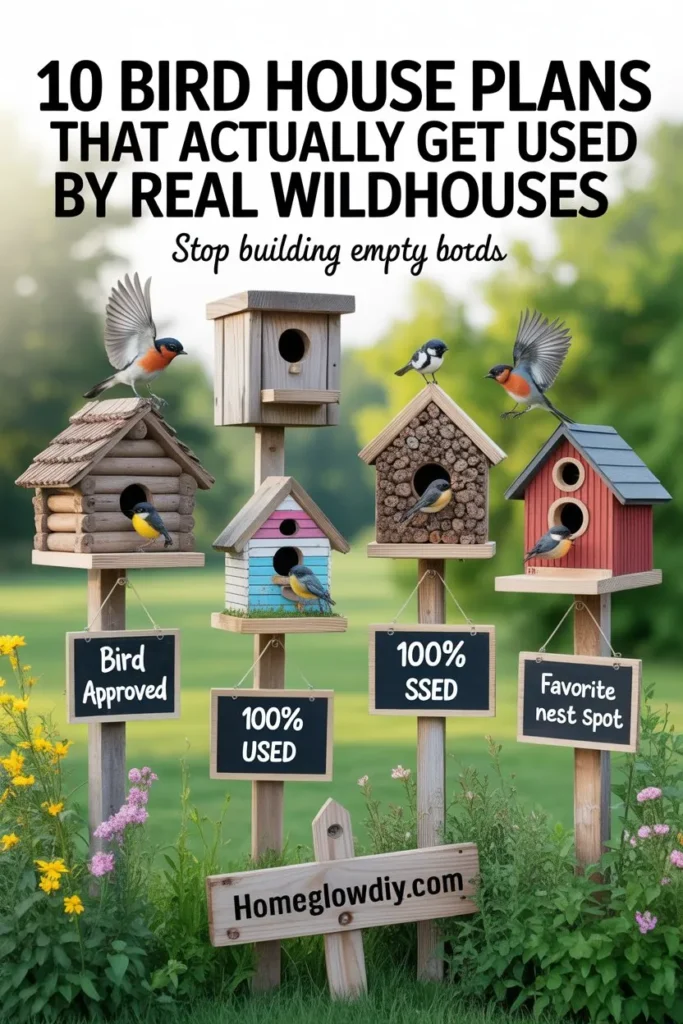
The secret was not expensive materials or advanced woodworking skills. It was using the right bird house plans for the right birds. Different species have very specific requirements for entrance hole size, interior dimensions, mounting height, and ventilation. Get those details right and birds find your house fast. Get them wrong and your birdhouse becomes garden decoration that no bird ever touches. This guide covers 10 proven bird house plans diy builders of all skill levels can follow, from complete beginners to experienced woodworkers ready for a real challenge.
Every idea in this list uses easy-to-find materials, comes with straightforward instructions, and has been tested in a real backyard. Whether you are looking for birdhouse plans free of complicated joinery, fun bird house plans for kids to build on a weekend, or detailed bird house plans with camera integration for wildlife watching, there is something here for every backyard and every skill level.
Before we get into the full list, it is worth understanding why so many birdhouses fail to attract a single bird. Most store-bought birdhouses are designed to look charming for human buyers, not to meet the nesting requirements of actual bird species. Entrance holes are often the wrong size. Interior floors are too small or too large. Ventilation is completely absent. Drainage does not exist. The wood is treated with chemicals that repel or harm birds. Good bird house plans wood patterns solve every one of these problems before you cut a single board, which is why starting with the right plan matters so much more than starting with expensive tools or premium materials.
Why the Right Bird House Plans Make All the Difference
Most people who try birdhouses and give up make the same mistake: they buy or build a generic decorative box and wonder why no birds move in. The truth is that wild birds are remarkably specific about where they nest. A chickadee needs an entrance hole of exactly 1.125 inches. A robin will never use an enclosed box at all because robins prefer open-fronted platforms. A wood duck needs a house mounted over water with a 4 by 3 inch oval entry. These are not preferences, they are hard biological requirements shaped by millions of years of evolution.
Good bird house plans account for every one of these requirements. They specify the exact interior floor dimensions so the nest is neither too cramped nor too exposed. They include ventilation holes near the roof so summer heat does not cook the eggs. They add drainage holes in the floor so rainwater does not drown nestlings. They position the entrance hole high enough from the floor that predators cannot reach in and grab chicks. These details separate a birdhouse that attracts nesting pairs season after season from one that sits empty year after year.
10 Bird House Plans That Actually Attract Wild Birds
1. Classic Bluebird Box Bird House Plans DIY Beginners Love

The Eastern bluebird box is the most beginner-friendly of all bird house plans DIY builders can start with. It requires a floor of 5 by 5 inches, an interior depth of 8 inches, and an entrance hole of exactly 1.5 inches centered 6 inches above the floor. Use untreated cedar or pine, never pressure-treated wood, which releases chemicals harmful to birds. Mount the finished box on a metal pole 4 to 6 feet high in an open grassy area away from dense trees. Face the entrance east or northeast to avoid afternoon heat. These birdhouse plans free of complicated joints are a single afternoon project that regularly attracts nesting bluebirds within the first season.
2. Simple Chickadee Bird House Plans Wood Patterns Free Style

Chickadees are among the most rewarding backyard nesters because they are curious, friendly, and will move into a well-placed box remarkably quickly. The best bird house plans wood patterns free versions for chickadees call for a 4 by 4 inch floor, a 1.125 inch entrance hole, and a total interior height of 8 to 10 inches. Chickadees actually prefer boxes filled partially with wood shavings because it mimics the rotting wood cavities they excavate naturally. Rough up the interior walls below the entrance with a chisel or saw so fledglings can grip the wood when it is time to leave. Mount 5 to 15 feet high on a tree trunk or wooden post near woodland edges for best results.
3. Open Front Robin Platform Bird House Plans for Robins
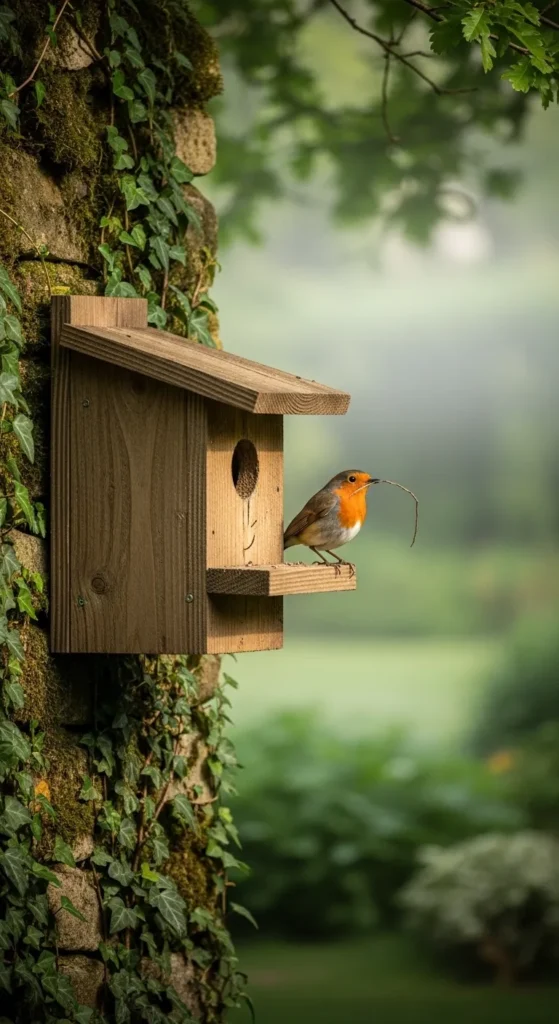
Robin lovers often waste years waiting for enclosed birdhouses to attract birds that will never use them. Robins need open-fronted platforms, and good bird house plans for robins reflect that completely. Build a simple shelf with a 6 by 8 inch floor, a 6 inch back wall, and a 3 inch front lip to contain the nest. Add a sloped roof overhanging at least 3 inches to keep rain off. Mount the platform 5 to 10 feet high on a wall, fence, or tree with nearby mud available, since robins incorporate mud into every nest they build. These bird house plans easy enough for a single afternoon of work are among the most reliably successful you will ever build.
4. Decorative Wood Pattern Bird House Plans Wood Patterns Homemade

For woodworkers who want their birdhouse to be as beautiful as it is functional, bird house plans wood patterns homemade designs open up a wonderful creative space. Scrollsaw or hand-carved decorative panels applied to the exterior of a standard chickadee or wren box add striking visual detail without changing any interior dimensions the birds require. Popular bird house plans wood patterns include leaf motifs, vines, geometric lattice, and even wildlife silhouettes. Use exterior-grade wood glue for all decorative elements and seal with a water-based exterior finish in a natural color. Never paint the interior or the entrance hole area. The result is a birdhouse that doubles as genuine garden art while still being fully functional for nesting birds.
5. Funny Whimsical Bird House Plans Wood Patterns Funny Designs

Not every birdhouse needs to look like a miniature cabin. Bird house plans wood patterns funny designs like tiny beach huts, miniature fire stations, fairy tale cottages, and novelty barn shapes bring enormous personality to any garden and still house real nesting birds when dimensions are correct. The key rule is to keep all interior measurements species-accurate regardless of how wild the exterior gets. A birdhouse shaped like a tiny coffee shop can still attract a nesting house wren as long as the floor is 4 by 4, the hole is 1.125 inches, and the interior depth is correct. These plans are also perfect conversation starters and make genuinely unique handmade gifts for bird-loving friends and family members.
6. Bird House Plans for Kids Simple Weekend Family Project

Getting children involved in wildlife gardening starts with giving them something real to build and watch. Bird house plans for kids work best when they use pre-cut lumber kits or simple designs with just five or six pieces, require only basic tools like a hammer, nails, and sandpaper, and produce a finished product kids can paint and personalize.
A basic wren box with a 4 by 4 inch floor and 1.125 inch entrance hole is ideal for a first build. Let children sand all surfaces, choose exterior paint colors, and pick the mounting location. When a bird actually moves in weeks later, that moment of discovery creates a connection to nature that lasts a lifetime and makes the whole project unforgettable.
7. Pallet Wood Bird House Plans Free DIY Zero Budget Build

One of the most popular bird house plans free diy approaches uses reclaimed pallet wood as the sole building material. Pallets are widely available for free from hardware stores, garden centers, and warehouses, and their weathered texture actually gives finished birdhouses a naturally aged look that birds seem comfortable approaching.
Disassemble the pallet carefully to preserve full-length boards, sand all surfaces to remove splinters, and check for any chemical treatment stamps before using. Avoid pallets marked MB which have been treated with methyl bromide. From safe pallet boards, you can cut all pieces needed for a standard wren or chickadee box in under an hour with a basic saw, making this one of the most accessible bird house plans diy projects available to any backyard builder.
8. Bird House Plans with Camera for Backyard Wildlife Watching
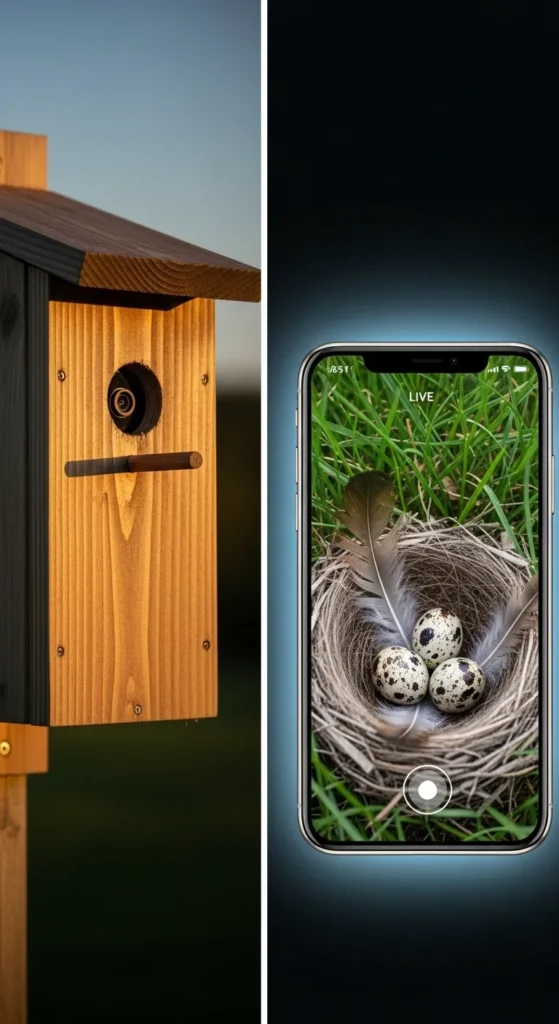
Bird house plans with camera integration are one of the most exciting developments in backyard birdwatching. A standard birdhouse design is enlarged slightly to accommodate a small wireless nest camera mounted in the upper interior corner, angled downward to capture the nest, eggs, and chicks in real time.
Many affordable cameras connect directly to a smartphone app so you can watch nesting activity live from inside your home. Build the box slightly larger than standard, use a 1.5 inch entry for bluebirds or 1.125 inch for wrens, and route the camera wire discreetly through the back wall. Bird house plans with camera setups have gone viral on social media because watching eggs hatch and chicks fledge in real time is genuinely one of the most captivating wildlife experiences a home backyard can offer.
9. Cedar Shake Roof Bird House Plans Wood Patterns Simple Build

Adding a cedar shake or shingle roof to a standard birdhouse instantly elevates it from basic box to genuine garden feature. Bird house plans wood patterns simple enough for beginners can be upgraded with this single detail by cutting small rectangular pieces of thin cedar at a slight angle and overlapping them from the bottom of the roof line upward like real roofing shingles. Cedar is naturally weather resistant and needs no additional sealing or treatment. The texture also blends naturally into garden settings in a way that painted flat roofs never quite achieve.
10. Multi-Chamber Purple Martin Bird House Plans Easy Tower Design

Purple martins are colonial nesters, meaning they live in groups and actively prefer multi-chamber birdhouses over single boxes. Bird house plans easy enough to build in a weekend can include a simple 4 or 6 chamber martin house mounted on a 12 to 20 foot pole in an open area at least 40 feet from tall trees. Each individual chamber needs a 6 by 6 inch floor, a 2.125 inch entrance hole, and interior depth of 6 inches. Paint the exterior white to reflect summer heat, as purple martins are highly vulnerable to overheating.
Pro Tips to Make Every Bird House Plan Work Faster
No matter which bird house plans you choose to build, a few universal principles dramatically increase your success rate. Wood choice matters more than most beginners realize. Untreated cedar is the gold standard for outdoor birdhouses because it resists rot and insect damage naturally without any chemical treatment. Pine works well too but needs a water-based exterior sealer on all outside surfaces. Never use plywood on the interior as the glue layers can off-gas chemicals that irritate nesting birds.
Timing your installation correctly is just as important as building correctly. Most cavity-nesting birds in North America begin scouting nest sites in late winter and early spring. Having your birdhouses clean, mounted, and ready by late February gives early scouts the best chance of finding and claiming your box before the main spring nesting rush begins. Clean out old nesting material after each season to prevent parasite buildup and make the box immediately ready for the next occupant.
Predator guards are non-negotiable if you want nesting success. A simple metal hole guard prevents squirrels and larger birds from enlarging the entrance. A baffle or stovepipe guard on the mounting pole keeps raccoons and cats from climbing up. These additions add very little cost or complexity to any of the bird house plans diy designs in this list but they can mean the difference between successful fledging and a nest that gets raided before the eggs even hatch.
Placement is the final piece most builders get wrong. Research the specific species you are targeting before mounting your birdhouse. Some species need open sunny locations while others need shade. Some want boxes near water while others avoid it. Some accept boxes in busy garden areas while others need complete quiet to nest successfully. Following species-specific placement guidelines from your bird house plans for robins, bluebirds, wrens, or martins is what ultimately separates a yard full of active nesting birds from one where the birdhouses stay empty season after season.