
13 Stunning Small Apartment Sewing Room Ideas to Maximize Space

Small apartments often feel cramped for creative hobbies, especially when trying to set up a functional sewing space. These small apartment sewing room ideas prove that even the tiniest homes can support your passion with smart organization and clever furniture choices. You can still enjoy sewing without a dedicated room by using small corners or dual purpose areas for your machines and fabric. Transforming a closet or adding a wall desk helps keep your floor clear. This guide explores practical ways to fit your sewing setup into a compact home while making every inch count. Focus on vertical storage to keep supplies handy, organized, and visually tidy.
1. Wall Mounted Pegboard Organizer
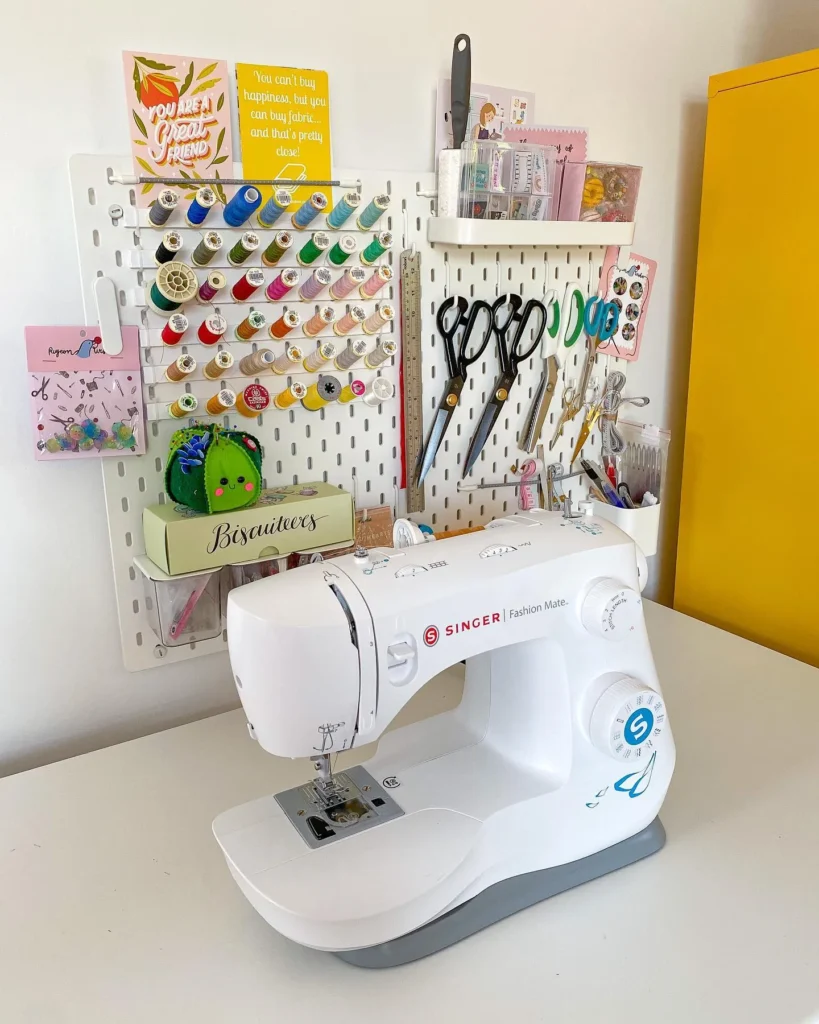
Vertical storage saves desktop space in tiny apartments. This white pegboard holds thread spools and scissors within easy reach. Small shelves and hooks keep tools organized above the machine.
A clear workspace allows for better focus on detailed projects. Colorful threads add a decorative touch to the white wall. This setup keeps essential sewing supplies visible and accessible. Before mounting a pegboard, locate wall studs or use anchors rated for the weight of the board and tools. Place frequently used items at arm’s height, keep sharp scissors in secure holders, and leave enough clearance to lift the sewing machine without hitting the hooks. Renters can use a freestanding pegboard or narrow utility cart instead of drilling into the wall.
2. Integrated Desk and Shelving System

Large desks with open storage units below maximize limited apartment floor plans. This layout uses deep cubbies under the work surface to hold fabric bins and supplies. Measure the sewing machine’s footprint and allow room behind it for fabric to move freely; a desk that looks large enough in a photo can feel cramped in use. Store heavier fabric low down and keep thread, needles, and clips in labeled containers. Once the workspace is organized, choose a starter project from these easy sewing projects. A rolling cart provides mobile storage for frequently used sewing notions.
Tall bookshelves utilize wall height to store large collections of clear fabric containers. Multiple pegboards above the desk keep small tools off the table for an open work area. This design combines fixed and flexible storage to manage a busy creative zone.
3. Sawhorse Desk and Perimeter Storage

A sawhorse desk provides a sturdy and wide workspace in the center of the room. This central table offers plenty of surface area for large fabric cutting and assembly. Small storage shelves on the sawhorse legs hold extra thread or tools.
Low cubby shelves and narrow cabinets line the walls to keep the floor clear. White boards and corkboards display patterns and inspiration above the perimeter furniture. Large pegboards keep rulers and measuring tools organized without cluttering the main table. For a rental, a folding cutting surface on sturdy sawhorses can provide the same flexibility without taking over the room permanently. Check that the tabletop will not wobble when the sewing machine runs, and secure any loose boards according to the furniture maker’s instructions. Keep enough space around the table to pull fabric through the machine without catching it on shelves. If the room is narrow, store one trestle and the tabletop vertically when the project is finished.
4. Large Cutting Table with Storage Base

A solid cutting table with a storage base offers a wide surface for patterns. This island unit features many drawers to keep fabric and tools tucked away. Open side shelves provide quick access to colorful fabric rolls.
Four large pegboards cover the wall to hold magazines and sewing books. Metal hooks keep heavy scissors and tools organized in a neat row. Small bins and pouches attached to the board store pins and pens. A cutting table with drawers is useful only if it leaves enough space to walk around it. In a small apartment, choose a folding cutting mat on a dining table or a rolling drawer unit that tucks underneath your existing desk. Store sharp rotary cutters in a latched case and keep pins in a magnetic dish or closed container. Before buying a large island, mark its outline on the floor and test whether you can fully open doors, drawers, and nearby closets.
5. Shabby Chic Corner Studio

Pink walls and delicate lace curtains create a soft atmosphere for creative work. A large L shaped desk fits into the corner to provide separate stations for different machines. Multiple sewing machines sit ready for use on the white tabletop.
A tall white rolling cabinet offers narrow drawers for organized thread and tool storage. Lower shelves beneath the main table hold bolts of fabric within reach. Decorative items and dolls fill the shelves to personalize this feminine sewing space. A corner workstation can also work on a tight budget: use one sturdy desk for the machine and add a compact drawer cart for scissors, bobbins, and thread. Set a bright task light on the side opposite your dominant hand to reduce shadows while stitching. Keep the chair at a height where your feet rest comfortably and shoulders stay relaxed. Choose just one decorative accent color so supplies remain easy to spot. These budget small apartment decorating ideas can help the workspace blend with the rest of the home.
6. Grid Wall Storage and Long Workspace

A black wire grid wall provides a versatile alternative to traditional pegboards in small apartments. This vertical system uses hanging baskets to hold paints and glues securely. Hooks keep pliers and long rulers visible while clearing the wooden desk surface.
Small white baskets and a tiered mini drawer unit organize tiny notions along the back of the table. A green cutting mat sits between the sewing machine and serger to create a central prep zone. This linear arrangement allows two machines to share one long surface without crowding the room. Check the worktop depth before copying this setup: a machine needs clear space behind the needle area for fabric to move. Place heavy thread cones in stable holders, and avoid leaving scissors on narrow grid hooks where they can fall. Keep power cords clipped away from the chair wheels and your feet. In a shared living space, a rolling cart with closed bins can hold tools when the table needs to function as a desk again. For more storage options, see these vertical storage solutions.
7. Multi-Level Crafting Hub

Tiered surfaces create distinct zones for sewing and pressing in a small room. A secondary rolling stand keeps a small iron ready for detail work. This setup uses a large main table for cutting and assembly.
A large design wall displays quilt pieces and keeps patterns organized. Small shelves and wall racks hold decorative items above the workstation. This layout maximizes vertical space to manage various stages of a project at once. Assign each area a task: cutting on the large table, sewing at seated height, and pressing on a stable heat-resistant surface. An iron should be unplugged when not in use and stored safely away from fabric piles. A lightweight design wall made from a portable board or a freestanding screen lets you lay out quilt blocks without drilling into rental walls. If you rarely iron, a foldable ironing board stored behind a door can save more space than a permanent pressing station.
8. Overhead Shelving and Pegboard Combo

High wooden shelves utilize the empty wall space above a sewing desk for extra storage. Large bins and decorative thread racks keep bulky items organized and out of the way. This keeps the main work surface clear for large fabric pieces.
A white pegboard mounted below the shelf holds small notions and inspirational signs. Thin metal shelves attached to the board store cones of thread and small containers. Hanging scissors and fabric scraps keeps essential tools visible for quick project work. Put infrequently used fabric boxes on higher shelves, but keep the heaviest items between waist and shoulder height so you are not lifting them overhead. Choose wall fixings appropriate for the wall type and total shelf load; renters can use a freestanding shelving unit with an anti-tip restraint where permitted. Organize the pegboard by task, with needles and presser feet in small labeled boxes rather than scattered loose. Leave enough space between the upper shelf and machine for good lighting and comfortable access.
9. Built-in Cabinetry and Island Station

Wooden upper and lower cabinets provide massive storage for fabric and patterns. This built-in desk offers multiple sewing stations for different machines. Drawers keep small notions hidden and organized along the wall.
A large stone island serves as a central hub for cutting and design work. This island provides a wide surface for a laptop and pressing tools. Integrated lighting and large windows ensure the workspace remains bright and functional. This room-sized cabinetry may be inspiring but is rarely practical in a small apartment. Borrow the organization system instead: a compact drawer desk, a narrow rolling cart, and a fold-out cutting surface can replicate the three main work zones. Sort fabric by project or material rather than color alone, so pieces are easy to find when you begin sewing. Position a lamp close to the machine needle and leave clear ventilation around any powered equipment. Avoid investing in a built-in island until you know the layout genuinely fits.
10. Attic Studio with Slanted Walls

Slanted ceilings create a unique backdrop for a cozy sewing studio. This layout uses a large white desk with integrated drawers to store essential tools. A sewing machine sits front and center for easy access to every project.
Open shelving units under the cutting table maximize storage in tight corners. Clear bins and baskets keep colorful fabric stacks organized but visible. A nearby closet provides extra space for overflow supplies and larger fabric bolts. Sloping ceilings reduce standing headroom, so reserve the low edges for lidded fabric bins or a short bookshelf rather than the main work chair. Sit where you can move your arms without hitting the ceiling and position the machine on a level, stable surface. Natural light is helpful for matching thread colors, but use an adjustable task lamp for evening sewing. Label transparent boxes by fabric type or project, and keep heavy cutting mats on lower shelves so you do not need to lift them over your head.
11. Compact Hutch Desk Nook

A wooden hutch desk fits neatly against a wall to create a dedicated sewing corner. This all-in-one unit provides a sturdy surface for the machine and built-in shelving above. Fabric rolls stand upright on the top shelf to save horizontal space.
Small wooden drawers and decorative boxes keep tiny notions organized within the side compartments. A bright pink armchair adds comfort and a pop of color to the small station. Positioning the desk near a window ensures plenty of natural light for intricate stitching. Before buying a hutch, check the depth of the sewing surface and make sure the upper shelving does not block the machine’s thread path or lift-up handle. Keep the most-used thread colors in shallow trays and store sharp items in a closed drawer rather than an open upper shelf. A chair with back support and adjustable height is often more useful than a decorative accent chair for long projects. In a shared bedroom or living room, close the hutch doors or cover the machine after use to reduce visual clutter.
12. Compact Desk with Built-in Thread Rack

A white desk provides a clean surface for a high-end sewing machine. This workstation features integrated cubbies and a built-in thread rack on the side wall. These compartments keep spools and measuring tapes organized in a small footprint.
Low shelves under the table offer extra space for fabric bins. A comfortable rolling chair fits easily into the small desk area. This clever design uses vertical wall space to store supplies without needing extra floor units. Attach a small thread rack close enough to reach without stretching across the machine, but do not let hanging tools interfere with fabric feeding. Group needles, presser feet, bobbins, and pins in labeled containers so tiny items do not disappear into a crowded desk. A cutting mat should lie flat during use and be stored according to its manufacturer’s directions. In a rental, a slim freestanding rack or rolling cart offers similar storage without drilling. Choose a desk depth that leaves comfortable space for fabric behind the machine.
13. Minimalist Dual Table Setup

Two separate white tables create a clean and organized workflow for apartment sewing. This arrangement divides the space into a dedicated stitching station and a secondary planning area. Minimalist surfaces prevent visual clutter in a compact room.
A colorful quilt acts as a large wall hanging to bring art into the workspace. Small tool holders and lamps keep the desk clear for fabric and patterns. This simple layout provides plenty of room for creative movement without bulky furniture. Two tables can work well if one is a lightweight folding model that doubles as a cutting or pressing station. Put the machine on the more stable desk and ensure there is enough legroom to sew without leaning forward. Keep an uninterrupted path between work zones so you are not carrying scissors or a hot iron around obstacles. Use a small task light and a lidded tool caddy rather than filling both surfaces with accessories. When a project ends, fold the secondary table away and reclaim the living space.